Sell Circuit Breakers in Austin, TX | Equipment Buyers
Transformer Buyers purchases eligible surplus, used, and decommissioned circuit breakers from Austin, Texas sellers, including facilities handling semiconductor manufacturing, data-center power, construction changeouts, and technology-campus upgrades. Send the breaker’s ratings, photographs, condition, and release constraints for a nationwide, case-by-case review. The practical goal is to determine whether your equipment is identifiable, marketable, safely releasable, and logistically workable—not to make assumptions from a single amperage number.
03Safety boundary: Do not open or remove breakers while equipment is energized.
04Access matters: Include location, loading method, clearances, and site rules.
01
Direct answer
Who buys circuit breakers in Austin?
Transformer Buyers is a nationwide buyer that reviews Austin-area surplus circuit-breaker opportunities case by case. We consider individual units, spare inventories, and decommissioning lots when identification, condition, authorization, and release logistics can be evaluated. Sellers may submit equipment from semiconductor plants, data centers, construction turnovers, and technology campuses; suitability depends on the equipment record, not the city alone.
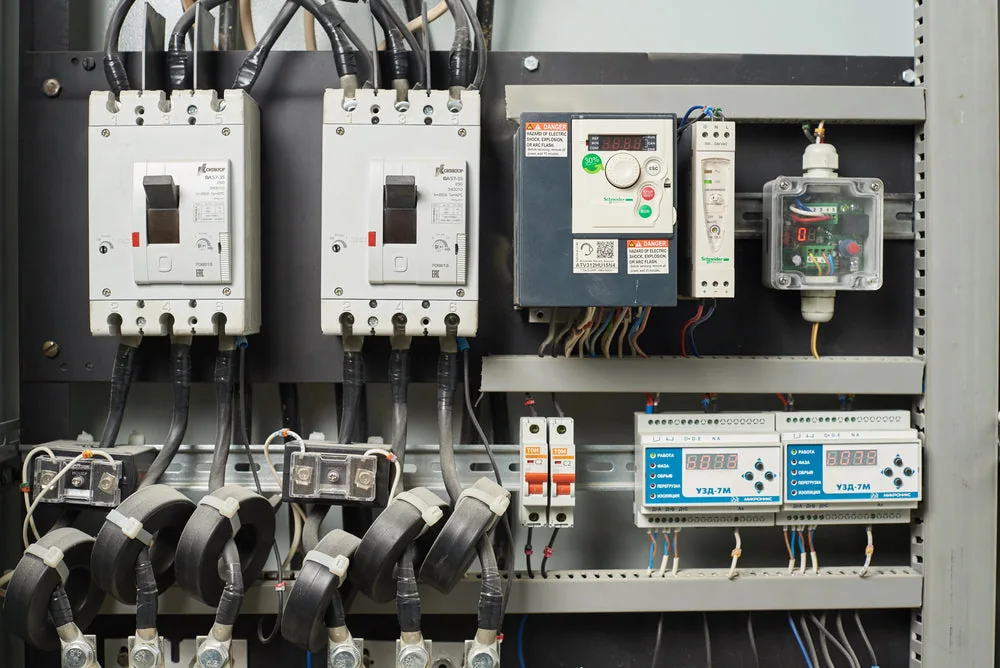
Identifiable breakers with legible markings and a clear chain of control are the best starting point. Molded-case, insulated-case, low-voltage power, panelboard, feeder, main, and drawout breakers may be relevant. Describe damaged, incomplete, contaminated, altered, or untraceable equipment candidly.
Individual breakers removed from authorized spare stock or completed upgrades
Matched lots of common catalog numbers, frames, trips, and pole counts
Drawout breakers with their cradles, shutters, accessories, and identification intact
Surplus switchgear components documented separately from the breaker itself
02
Austin context makes application details especially useful
Austin’s industrial and technology setting makes application details useful, not automatically valuable. A City of Austin project summary describes Applied Materials manufacturing at East Highway 290 and a support location housing IT, research and development, and a data center [1]. Similar-looking breakers can therefore support very different loads and systems.
UT Austin reports that its Texas Institute for Electronics has clean-room space and is establishing an open-access research, development, and prototyping fabrication facility [2]. Texas defines qualifying data centers as purpose-built facilities for servers and related equipment [3]. These references establish context, not that any facility’s equipment is for sale.
State whether the breaker served a process tool feeder, UPS or generator distribution, mechanical system, buildout, lab, construction changeout, or spare shelf. Note continuity-of-service constraints so a reviewer can distinguish releasable surplus from active equipment.
03
Identify the breaker from exterior markings before requesting review
An amperage marking alone does not identify a breaker for serious review. Send clear exterior photographs of the manufacturer label, catalog or model number, front face, sides, and visible accessory labels. Keep images tied to an inventory line. Do not remove a cover or enter energized equipment for a photograph.
Record frame size and actual trip or sensor rating when separately marked. Capture voltage and interrupting rating together. On electronic-trip units, photograph the trip-unit face and visible settings only when safely accessible. For drawout styles, identify the breaker and cradle as a set and note remaining accessories.
Manufacturer and full catalog or model number, including suffixes
Frame rating, trip rating or sensor rating, and number of poles
Voltage rating and interrupting rating, with every visible label captured
Trip-unit type, visible settings, and installed accessories
Fixed, plug-in, bolt-on, or drawout mounting details; include cradle information
Quantity by exact identifier and an honest condition description
04
Build a review package that can be checked without guesswork
Use one inventory line per exact catalog number, quantity, condition, and storage location. Pair it with photos of every variant. Identify unused surplus, removed, tested, repaired, incomplete, water-exposed, corroded, or damaged units. Retain original cartons, manuals, test reports, or maintenance records with the lot when available.
For larger inventories, include non-sensitive material such as a redacted one-line reference, asset list, maintenance or test records, packing list, and storage photos. An internal tag can aid tracing but does not replace the maker’s catalog label. Separate manufacturers and incompatible variants rather than grouping by amperage.
Confirm authority to dispose of the equipment and resolve any owner, tenant, lender, contractor, or closeout approvals. A review does not transfer title or authorize disconnection; documents should establish the release path before removal is discussed.
05
Put de-energization and authorization ahead of removal
No valuation question overrides electrical safety. Do not open energized equipment, defeat an interlock, rack a breaker, remove a bolted device, or reach into a lineup for information. The owner and its qualified, authorized personnel control outages, isolation, verification, and removal under site procedures.
OSHA requires energy-control procedures and lockout or tagout to prevent unexpected energization, startup, or stored-energy release during covered servicing. It defines a manually operated electrical circuit breaker as an energy-isolating device, unlike a push button [4]. The governing program, electrical-safety rules, and qualifications remain the seller’s responsibility.
Identify the organization authorized to release each item, owner approvals, required outage coordination, and whether it is already removed and safely stored or still installed.
06
Plan freight and site access around the actual Austin location
Semiconductor, data-center, construction, and technology-campus sites may have controlled loading areas, security procedures, active work zones, and critical operations. State whether equipment is at a dock, ground level, indoors, in a secured cage, on a pallet, or still in a building. Note badges, escorts, delivery windows, safety orientations, and contractor requirements.
Include approximate dimensions and weight; available forklift, dock, pallet jack, crane, or rigger; and stairs, narrow doors, elevator, overhead, or staging limits. For drawout and large-frame breakers, explain post-removal protection from impact and moisture. Identify a responsible contact and any construction-clearance deadline.
These details support case-by-case feasibility review, not a pickup commitment, schedule, or acceptance assurance.
07
Continue with the right Austin and equipment resources
Submit one organized package, then keep equipment in its current safe condition until authorization and a workable plan are established. List switchgear, transformers, UPS equipment, and other electrical assets separately. Catalog-level detail supports a practical review.
Browse the [Texas circuit-breaker city directory](/circuit-breaker-buyers-texas) for city pages and the [circuit-breaker equipment guide](/circuit-breaker-buyers) for preparation. They complement—not replace—site authorization, safety procedures, and review of the actual lot.
Never open energized equipment or remove electrical equipment solely for an inquiry. Use qualified personnel, lockout/tagout procedures and applicable site rules.
Straight answers
Questions sellers ask.
These answers are intentionally specific and conditional. Final terms depend on the equipment and written agreement.
Will Transformer Buyers review circuit breakers from an Austin semiconductor or data-center facility?+
Yes. Submit the equipment record, condition, ownership or release status, and access constraints for nationwide, case-by-case review. The application provides context, but identifiable equipment and a safe release path determine whether an opportunity can be evaluated.
How do I find the catalog number if the breaker is still in switchgear?+
Use labels and markings safely visible from outside the equipment, plus existing asset records or drawings when available. Do not open energized equipment or bypass an interlock to read a label. The owner’s qualified personnel should manage any necessary outage and safe access.
Does the frame rating tell you the trip rating?+
Not always. A frame can support different trip or sensor ratings, so send both values exactly as marked. Include the trip-unit type and visible settings where safely accessible, because those details help distinguish otherwise similar breakers.
Can I submit a mixed lot of breakers from a construction changeout?+
Yes, but separate the lot by manufacturer, catalog number, frame, trip, pole count, and condition. Photographs of every variant and a line-item quantity make a mixed construction surplus inventory more reviewable than a single combined total.
Who needs to authorize breaker removal?+
The owner or the party with documented authority to dispose of the asset must address release approval. When equipment is installed, the facility’s authorized and qualified personnel control de-energization, isolation, and removal under its procedures; a buyer inquiry does not create that authorization.
What Austin site details should I provide before freight is considered?+
Provide pickup location, floor or dock status, dimensions and weight, packaging, loading equipment, security rules, access hours, and clearance limits. This supports feasibility review, not a collection date or acceptance.