Sell Circuit Breakers in Atlanta, GA | Equipment Buyers
Transformer Buyers reviews surplus and used circuit-breaker opportunities from Atlanta, the metro area, and nationwide on a case-by-case basis. Clear photos, complete ratings, ownership documentation, and practical access information help determine whether an item or lot is a fit before anyone plans a transaction.
03Authorized de-energization comes before removal.
04Access and loading details shape freight planning.
01
Direct answer
Who buys circuit breakers in the Atlanta market?
Transformer Buyers buys qualifying surplus, used, and decommissioned breakers from Atlanta-area owners, contractors, facility managers, distributors, and redevelopment teams. Opportunities are evaluated nationwide, case by case. A review considers identification, condition, quantity, ownership, documentation, and safe-movement needs; not every lot is a purchase fit.
Start with an organized list and readable photographs—not a scrap-value guess. This distinguishes reusable breakers from damaged, incomplete, obsolete, or site-restricted material. For broader market coverage, consult the circuit-breaker city directory and equipment guides; both help frame inventory before submission.
02
Why Atlanta facility context changes a breaker sale
Atlanta inventory can emerge from airport-support operations, data infrastructure, distribution space, and changing commercial properties. Hartsfield-Jackson reports three cargo complexes with more than 1.8 million square feet of handling space and dockside access to Interstates 75, 85, 285, and 20 [1]. Disclose dock rules, security clearance, delivery windows, and truck routing rather than leaving the buyer to assume them.
Data-center and large-load infrastructure can also produce highly specified electrical gear. Georgia Power describes area system upgrades and long-term planning for large energy users, including data centers [2]. In these environments, precise trip-unit, frame, voltage, and interrupting-rating information is especially important because similar-looking breakers may have very different applications.
Commercial redevelopment deserves the same care. Invest Atlanta is the City's official economic development authority and describes tools that include tax-increment financing, revolving loan funds, and redevelopment-oriented programs [3]. During a tenant turnover, renovation, or demolition sequence, preserve asset records and establish who may release equipment before it is removed from a panel, switchboard, or storage room.
03
What circuit breakers may be worth submitting
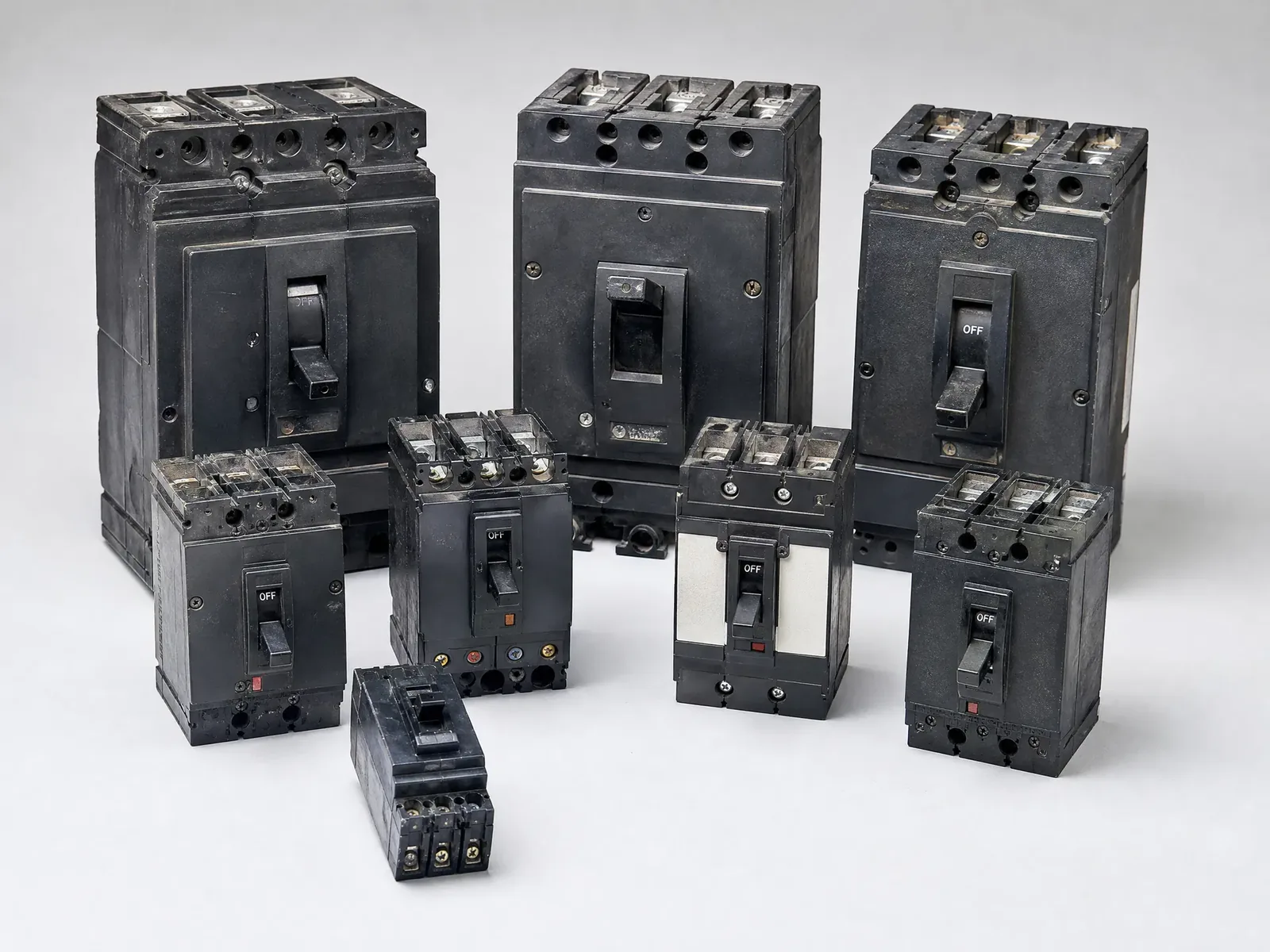
Submit individual breakers, spare inventory, panelboard stock, switchgear and switchboard breakers, molded-case breakers, insulated-case breakers, air circuit breakers, and drawout units when identity and condition are documented. Assemblies can be relevant when the breaker, cradle or cassette, accessories, and hardware remain together. Large lots benefit from a row-by-row inventory, but a small lot with a legible nameplate can still merit review.
Do not combine every electrical item into one undifferentiated count. Separate breakers by manufacturer and catalog number, then note whether they are new surplus, installed-but-removed, tested, untested, incomplete, damaged, or exposed to water, smoke, heat, corrosion, or impact. State what you know without attempting a technical diagnosis. Missing covers, line/load lugs, racking hardware, trip units, or terminal shields can materially change evaluation and packing needs.
Molded-case, insulated-case, low-voltage power, and drawout breakers
Spare breakers from data halls, distribution facilities, offices, and airport-support properties
Complete breaker-and-accessory sets, including cradles, plugs, and racking gear when present
Organized surplus lots separated from damaged or unknown-condition material
04
How to identify a breaker and build a useful submission
Photograph the front, side, nameplate, catalog or model label, terminals, accessories, and any visible damage in good light. For each line item, provide manufacturer; catalog or model number; frame size; trip or ampere rating; number of poles; voltage; interrupting rating or kAIC; trip-unit type and rating; and whether it is fixed, plug-in, bolt-on, or drawout. On drawout gear, show the breaker in its cell only after qualified personnel have made the area safe, plus the cradle or cassette, rails, shutters, racking interface, and any keying.
Include quantity by exact catalog number, date or age if known, service history if available, and clear condition notes. Wide photos of cabinet labels, pallet tags, and the storage area help reconcile the count. A simple spreadsheet is useful for a large Atlanta project: one row per unique item, quantity, condition, storage location, and photo filename. It prevents a buyer from treating different poles, trip units, or interrupting ratings as interchangeable.
05
Safety, authority, and documentation before removal
Never open energized equipment or remove a breaker from energized gear for photographs, inspection, or sale. The facility owner should use qualified, authorized electrical personnel and its established energy-control process. OSHA requires lockout or tagout devices to be applied by authorized employees, hazardous stored energy to be made safe, and isolation and de-energization to be verified before work begins [4]. A buyer's interest does not replace the site's safety rules, permits, or utility coordination.
Before listing a lot, confirm the seller has authority to sell it and retain relevant records: asset release or bill of sale, site contact, make/model inventory, maintenance or test history if available, and documentation of removal status. Identify leased equipment, landlord-owned gear, utility property, and any customer or airport security constraints early. If an assembly has oil, unusual contamination, damaged insulation, or environmental labels, disclose it and preserve related records; do not represent unknown material as clean or reusable.
06
Freight and site access: information that prevents surprises
A good review includes the actual pickup conditions: full site address, floor or yard location, number of pallets or cabinets, approximate dimensions and weights if known, dock or grade-level access, forklift availability, loading-dock limits, liftgate or rigging requirements, and allowed hours. Mention narrow drives, parking restrictions, staging space, escort procedures, union or contractor rules, and whether equipment must be palletized or protected from weather. These are planning inputs, not promises of a pickup method or schedule.
Atlanta access can vary sharply between a secure airport-adjacent facility, a congested commercial redevelopment site, and a regional distribution building. Share gate and badging requirements, appointment rules, truck size limits, and contact information for the person who can release the lot. Transformer Buyers can then review the opportunity case by case and discuss viable next steps based on the equipment and the site's real constraints.
Never open energized equipment or remove electrical equipment solely for an inquiry. Use qualified personnel, lockout/tagout procedures and applicable site rules.
Straight answers
Questions sellers ask.
These answers are intentionally specific and conditional. Final terms depend on the equipment and written agreement.
Can I sell breakers that were removed during an Atlanta renovation?+
Often, removed surplus can be submitted when you can identify it, describe its condition, and show that you have authority to sell it. Keep removed items separated from damaged demolition material and include the catalog numbers, quantities, photos, and any removal records. Review is case by case.
What if I only have photos and no original invoice?+
Send the photos and available site or asset information. A readable nameplate, counts by catalog number, condition notes, and a statement of ownership are more useful than an undocumented estimate. The reviewer may request additional records before deciding whether the opportunity fits.
Do I need to remove the breaker before asking for a review?+
No. Do not remove or open energized equipment to create a submission. Provide safe exterior photos and site information first. Any electrical isolation, access, and removal work must be handled under the owner's procedures by appropriately qualified and authorized personnel.
Which label details make the biggest difference?+
The manufacturer, catalog or model number, frame, trip rating, poles, voltage, interrupting rating, trip unit, and mounting or drawout details are the core fields. Photos that capture the full label and the breaker face are usually better than typed details alone.
Can you review a mixed pallet from a distribution facility?+
Yes, if the contents are separated and counted by exact item where possible. Mark unknown, damaged, incomplete, or water-exposed pieces separately. A mixed pallet is easier to assess when pallet photos are paired with a line-item list instead of a single total count.
What site information should I send for an airport-area or secure facility?+
Describe the location within the property, access route, dock or ground-level loading, staging space, equipment available, appointment windows, truck restrictions, and any escort, badge, or security process. This allows freight and access feasibility to be considered without assuming a particular pickup arrangement.