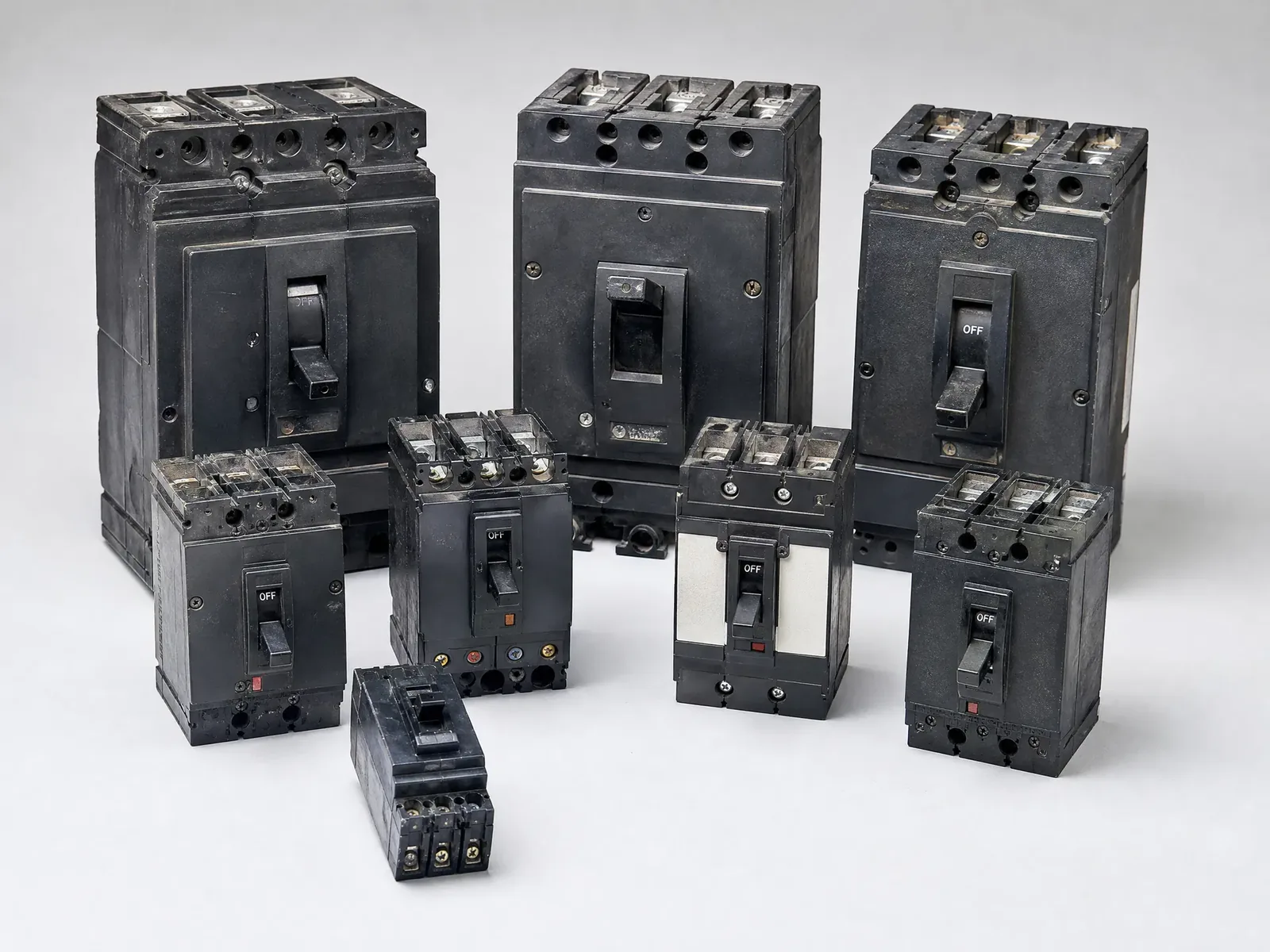
Selling circuit breakers starts with clear identification, safe site status, and honest condition details. Transformer Buyers reviews nationwide breaker, switchgear, and surplus-lot opportunities case by case to help sellers understand possible resale, refurbishment, or recovery paths.
Every equipment guide and market directory is visible from this hub. Pages explain identification, condition, documentation and logistics without invented local offices or copied city templates.
Transformer Buyers is a national point of contact for owners selling circuit breakers, switchgear components, and surplus electrical lots. Equipment resellers, refurbishment channels, dismantling contractors, recyclers, and end users may be potential outlets; Transformer Buyers reviews nationwide opportunities case by case rather than assuming every item fits the same channel.
The largest breaker is not always the strongest opportunity. A common molded-case unit with a readable label may be easier to identify than an unmarked cabinet component, while insulated-case or low-voltage power breakers can depend on complete assemblies, accessories, and application history. Clear facts distinguish reusable inventory from material better handled through another disposition path.
02
What circuit breakers and surplus electrical lots can be reviewed
A review can cover molded-case, insulated-case, and low-voltage power breakers; panelboard or switchboard breakers; drawout units; trip units; cradles; shutters; lugs; and compatible switchgear sections. Project overstock, decommissioning inventory, maintenance spares, and warehouse cleanouts can be presented as one lot when the list preserves each item’s identity.
Condition and completeness matter. Separate new-in-box stock, shelf spares, installed units, tested equipment, and demolition removals. Note missing covers, cracked cases, corrosion, water exposure, burnt odor, altered labels, disconnected accessories, and whether a breaker remains mounted. A moving handle does not establish serviceability.
Helpful lot groupings include:
OEM-packed spares with catalog numbers and quantities
Matched breaker, cradle, and accessory assemblies
Switchgear lineups or sections with breaker schedules
Mixed surplus sorted by manufacturer and condition
03
Identify the breaker from its markings, not its appearance
Start with the manufacturer and complete catalog or model number on the nameplate, label, handle, or trip unit. Record frame, ampere or trip rating, poles, voltage, and interrupting rating. These are distinct: ampere marking identifies current rating, while interrupting rating is the fault current a breaker is designed to interrupt at rated voltage under standard test conditions [2] [3]. Photograph the full front and every marking.
State the readable trip-unit family and settings, including thermal-magnetic, electronic, or interchangeable-trip details. Identify fixed, plug-in, bolt-on, I-Line, unit-mount, or drawout construction; for drawout units, include cradle, racking, shutters, and position details. Configurations vary by frame, connection, poles, voltage, and trip system [3]. Never infer compatibility from color, handle shape, or a partial number.
04
Send photos and data that make a review practical
A useful submission lets a reviewer compare the item with its markings. Photograph the front, both sides, terminals only when safely accessible, labels, trip unit, accessories, packaging, and visible damage. For a lineup or palletized lot, add wide views and a written count that matches the photos.
Put the following information in a message or spreadsheet. If a field is unknown, say so rather than estimate it; a candid incomplete list is easier to evaluate than incorrect ratings.
Manufacturer; complete catalog or model number; frame; trip rating; poles; voltage; and interrupting rating
Trip-unit type, sensor or rating plug details, and visible accessory numbers
Fixed, plug-in, bolt-on, bus-connected, or drawout mounting details, including cradle status
Quantity by exact item, condition, packaging, test records, and any known defects
City and state, whether the equipment is loose or installed, and photographs with readable labels
05
Keep de-energization, authorization, and removal in the right hands
Do not open energized equipment, remove covers, rack out a breaker, or attempt to disconnect an installed unit for photographs. A handle in the off position is not proof that all sources are isolated. OSHA requires safe de-energizing procedures to be determined in advance, disconnection from all energy sources, lockout or tagging where employees may be exposed, and verification by a qualified person before equipment is treated as de-energized [1].
The facility owner or another authorized party should arrange access and determine who may remove equipment. Identify the asset owner, person authorized to release it, site rules, outage constraints, security requirements, and responsible electrician or qualified contractor. Until safe access is established, exterior photos and an honest status note are enough for an initial review.
06
Document the lot and plan access before freight is considered
For a surplus lot, attach an asset list or breaker schedule, photos, available purchase or maintenance records, test reports, and a statement of ownership or authority to sell. Note service history, indoor storage, water exposure, fault events, or renovation removal. Documentation does not certify condition, but it can separate complete assemblies from loose parts.
Freight planning starts with approximate dimensions and weight, pallet or crate condition, dock or grade-level access, forklift or crane availability, aisle and door restrictions, stairs, site hours, truck limitations, and a site contact. Do not strap, lift, or load equipment until the responsible site team has assessed the work. Transformer Buyers considers access, quantity, configuration, location, and documentation case by case.
If a cleanout includes batteries, lamps, mercury-containing devices, or other discarded material, identify and separate them from reusable breaker inventory. EPA’s federal universal-waste categories cover specific materials and state programs vary, so use the applicable environmental process [4]. Use the related city directory to orient a location search and the equipment guides below to compare related assets.
Never open energized equipment or remove electrical equipment solely for an inquiry. Use qualified personnel, lockout/tagout procedures and applicable site rules.
Straight answers
Questions sellers ask.
These answers are intentionally specific and conditional. Final terms depend on the equipment and written agreement.
Can I sell one circuit breaker instead of an entire surplus lot?+
Yes, an individual unit can be submitted for review. Send complete label photos, the exact catalog number, ratings, condition, quantity, and location. Whether a single item fits a resale, refurbishment, or another channel depends on those facts and is evaluated case by case.
What should I provide if the breaker label is faded or missing?+
Photograph the entire breaker, handle, terminals when safely accessible, trip unit, mounting hardware, packaging, and nearby equipment labels. Share any breaker schedule, purchase record, maintenance record, or part list. Do not guess at voltage, frame, or interrupting rating when the marking cannot be confirmed.
Are molded-case, insulated-case, and drawout breakers reviewed differently?+
Yes. Their construction, trip systems, mounting, accessories, and required companion parts can differ. A drawout unit should be identified with its cradle and racking details, while a molded-case unit still needs its precise catalog number, poles, ratings, and connection style.
Can I submit breakers that are still installed in a panel or switchgear?+
You can submit exterior photos and available records while equipment remains installed. Do not open energized equipment or attempt removal for the submission. The authorized facility party and qualified electrical personnel must control de-energization, access, and any removal work.
What if a breaker is untested, damaged, or exposed to water?+
Describe the condition plainly and photograph the issue. Separate damaged or questionable units from clean, identified inventory, and include any fault, water, fire, or storage history you know. Condition information helps determine whether the material should be considered as reusable equipment, parts, or another disposition path.
How should I prepare a mixed electrical surplus lot for review and freight planning?+
Sort by manufacturer and exact catalog number, count each item, photograph labels, and note missing accessories. Provide approximate dimensions, weights if known, packaging, dock or ground-level access, lifting resources, site restrictions, and authorized contacts. Those details support a practical case-by-case review without promising a pickup arrangement.