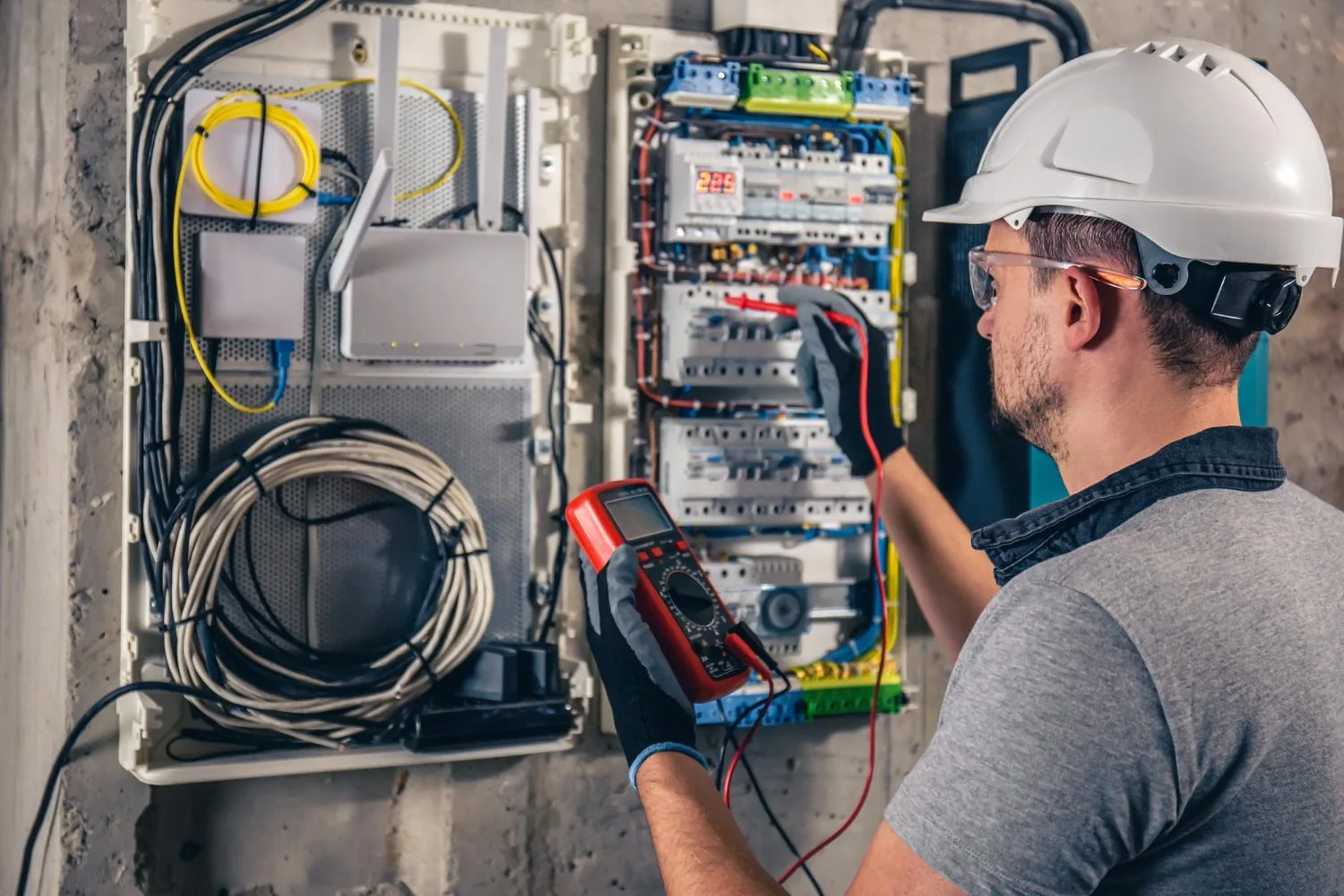
First-party photo of a technician inspecting an electrical control panel

Circuit Equipment Guide

Sell Medium-Voltage Circuit Breakers

Transformer Buyers reviews medium-voltage circuit-breaker opportunities nationwide, case by case. Nameplate details, switchgear fit, condition, and site access help assess whether a vacuum or legacy breaker is practical to move.

At a glance

01Medium-voltage equipment is commonly classified above 600 V and below 69 kV.
02A 15 kV class breaker may serve several lower nominal system voltages.
03Drawout breakers are not automatically interchangeable across switchgear lineups.
04Do not remove covers or open energized equipment for photos.
01

Direct answer

Who buys medium-voltage circuit breakers?

Transformer Buyers reviews surplus and retired medium-voltage circuit breakers from utilities, plants, campuses, contractors, data facilities, and electrical distributors throughout the United States. We consider complete vacuum breakers, older air- or oil-insulated units, generator breakers, and removable assemblies when identification, condition, and recovery circumstances can be evaluated. Every opportunity is reviewed nationwide on its own facts; a rating alone does not establish a purchase decision.

Identifiable units from upgrades, spare-inventory reductions, or switchgear replacements are most useful. A breaker with a nameplate, operating mechanism, primary disconnect hardware, secondary plug, and applicable racking parts is easier to assess than an unmarked loose unit. Switchgear context matters because a breaker may suit reuse, parts, or a specific match rather than universal replacement.

02

Identify the breaker before describing it as medium voltage

Start with the manufacturer’s nameplate and any catalog, type, serial, or assembly number. Medium voltage is a voltage class, not one design. Eaton places it between 600 V and 69 kV; a 15 kV class lineup may serve 12.47, 13.2, 13.8, or 14.4 kV. Report nameplate values rather than inferring them from facility service.

Separate continuous-current rating from interrupting rating: amperes describe normal carrying capability, while kA describes fault duty. Distinguish a circuit breaker from a fused switch, contactor, load-break switch, or vacuum fault interrupter; devices in one lineup are not automatically interchangeable.

  • Record manufacturer, catalog/model or type, serial number, and date if shown.
  • Capture rated maximum voltage, continuous current, frequency, interrupting rating, and number of poles.
  • Note whether the application was feeder, motor, transformer, capacitor bank, generator, or tie service.
03

Vacuum technology, legacy breakers, and mechanism details

Vacuum breakers are common in indoor metal-clad or metal-enclosed lineups. Sealed vacuum interrupters extinguish the arc, while an operating mechanism opens and closes the breaker. Spring-operated mechanisms are common; ABB describes VD4 as a vacuum breaker with a mechanical spring mechanism. Photograph labels, close and trip coils, operation counter, auxiliary contacts, and stored-energy or control-voltage markings without disturbing equipment.

Legacy air-magnetic, air-break, oil, and gas-insulated equipment needs deliberate review. Missing parts, altered wiring, contamination, obsolete controls, or unknown history can affect evaluation. Never describe an untested breaker as service-ready. Identify insulating gas or fluid and retain handling records; EPA explains that SF6 is used for insulation, interruption, and arc quenching and must not be casually released.

  • State the interruption medium if known: vacuum, air, oil, or gas.
  • Describe spring-charged, solenoid, pneumatic, hydraulic, or other operating mechanism if identified.
  • Include any relay, trip unit, controller, or control-power transformer remaining with the breaker.
04

Send photos and data that make a review possible

A short, organized package is more useful than a general availability statement. After authorized access and safe conditions are confirmed, photograph front, rear, both sides, nameplate, mechanism exterior, primary stabs or bushings, secondary disconnect, truck or cradle, and visible damage. If installed, show cubicle designation and surrounding lineup without opening energized sections.

Attach available test reports, maintenance logs, one-line diagrams, bills of material, manuals, and removal records. They clarify included accessories and whether the breaker was operated, serviced, stored indoors, weather-exposed, or damaged. State known facts plainly and label uncertainty; accurate unknowns are better than guesses.

  • Manufacturer; catalog/model; frame or cell; serial number; poles; voltage; continuous current; and interrupting rating.
  • Trip rating, trip unit or relay make/model, control voltage, and all visible accessory or interlock details.
  • Fixed or drawout mounting, horizontal or vertical arrangement, truck/cradle status, and dimensions or weight if documented.
  • Quantity, location, condition, operating history, storage setting, and whether the equipment is loose, racked out, or still installed.
05

Authorize and de-energize safely before inspection or removal

The seller controls access and must use its own qualified personnel, procedures, and authority chain. Do not open energized equipment, reach into compartments, rack a breaker, defeat an interlock, operate a mechanism, or remove covers for a sale inquiry. Exterior photos and existing records can begin a review.

OSHA requires authorized employees to apply lockout or tagout to energy-isolating devices, address stored energy, and verify isolation and de-energization before work. An open breaker is not, by itself, a removal plan. Coordinate isolation, testing, grounding, release authorization, and removal with the facility’s safety program, operations team, and qualified electrical contractor.

  • Confirm asset ownership and obtain the facility’s written release or disposition authorization.
  • Keep lockout/tagout, testing, and switching decisions with authorized, qualified personnel.
  • Disclose water intrusion, fire, fault, arc-flash, flood, corrosion, or impact history when known.
06

Document lots, switchgear fit, and freight access

For several breakers, prepare a lot list tying each serial number to cubicle, rating, quantity, accessories, and condition. Add one-line diagrams or lineup schedules when available, redacting sensitive details. Drawout geometry and secondary connections matter: Schneider Electric identifies its VR as a horizontal drawout breaker for Masterclad switchgear. Manufacturer, family, cell, and racking arrangement can be as important as ratings.

Freight planning begins with facts. Identify whether the breaker is palletized, on a roll-out truck, indoors, at grade, below grade, or above grade. Share documented dimensions and weight; door widths, elevator capacity, stairs, turns, dock, crane or forklift restrictions, security rules, and certificates affect removal. Transformer Buyers reviews nationwide opportunities case by case; site conditions and authorization determine feasibility.

  • List rails, trucks, shutters, interlocks, lifting hardware, spare bottles, relays, and control parts separately.
  • Provide dock, doorway, floor-route, lift, rigging, scheduling, and site-contact constraints.
  • Preserve manuals, diagrams, test records, and asset-release paperwork with the lot until disposition is complete.

Never open energized equipment or remove electrical equipment solely for an inquiry. Use qualified personnel, lockout/tagout procedures and applicable site rules.

Straight answers

Questions sellers ask.

These answers are intentionally specific and conditional. Final terms depend on the equipment and written agreement.

Can I sell a medium-voltage breaker that is still installed in switchgear?

Yes, an installed unit can be submitted for review with exterior photos, nameplate details, lineup information, quantity, and an honest description of its status. Do not operate, rack out, disconnect, or open energized equipment to create the listing. Removal must be planned and authorized by the facility using qualified personnel and its electrical safety procedures.

Which ratings should I send from the nameplate?

Send the maximum voltage, continuous-current rating, interrupting rating in kA, frequency, poles, catalog or type number, serial number, and control voltage if shown. Add the trip rating and the trip-unit or relay model. These fields distinguish equipment that may look similar while serving very different duties.

Does a 15 kV breaker work in any 15 kV switchgear lineup?

No. Electrical class is only one part of fit. Drawout trucks, primary disconnect spacing, secondary plugs, shutters, racking interfaces, cell geometry, interlocks, control schemes, and manufacturer family can differ. Provide photos of the breaker and its cell or a documented lineup schedule so compatibility can be evaluated rather than assumed.

Are old oil, air, or SF6 breakers worth submitting?

They can be worth reviewing when their identification, completeness, condition, and removal circumstances are clear. State the interruption medium and disclose known leaks, fluids, contamination, obsolete components, or missing accessories. Gas- or fluid-containing equipment may require specialized environmental and safety handling, so do not drain, vent, or alter it for a sale inquiry.

What condition information helps with a breaker review?

Report whether the unit is energized, de-energized, removed, racked out, stored indoors, stored outdoors, tested, repaired, or untested. Include known service history, operations count if documented, maintenance dates, test reports, damage, corrosion, water exposure, fault history, and missing parts. A candid condition record supports a more responsible review.

Do I need weight and access details before contacting Transformer Buyers?

Begin with photos and nameplate data. Before removal planning, share documented weight, dimensions, floor level, travel path, loading access, restrictions, site contact, and release process. Nationwide opportunities are evaluated case by case.
Keep exploring

Every guide connects to the main selling process and the next most relevant topic—no dead ends or orphan pages.

Nationwide electrical-equipment seller hub

Circuit Breaker Buyers

Selling circuit breakers starts with clear identification, safe site status, and honest condition details. Transformer Buyers reviews nationwide breaker, switchgear, and surplus-lot opportunities case by case to help sellers understand possible resale, refurbishment, or recovery paths.

Circuit Equipment

Sell Molded-Case Circuit Breakers

Transformer Buyers reviews surplus molded-case circuit breaker opportunities nationwide, case by case. Clear labels, honest condition notes, and practical removal details help determine whether an MCCB lot is suitable for resale or recovery review.

Circuit Equipment Guide

Sell Air Circuit Breakers

Air circuit breakers can be viable surplus when their nameplate, trip unit, mounting arrangement, and condition are clearly documented. Send safely obtained details so Transformer Buyers can review a nationwide opportunity case by case.

Circuit Equipment Guide

Sell Vacuum Circuit Breakers

Transformer Buyers reviews surplus vacuum circuit breakers from facilities across the United States on a case-by-case basis. Send clear nameplate photos, configuration details, condition notes, and site-access information so the equipment can be evaluated accurately without interrupting safe plant operations.

Nationwide circuit breaker selling

Circuit Breaker Buyer Service Areas

Transformer Buyers reviews used and surplus circuit breaker opportunities nationwide, including the 50 city service areas below. Share accurate equipment details, safe-access information, and lot records so each opportunity can be evaluated case by case.

Request a transformer review

Contact Transformer Buyers

Call or text (951) 733-6603, or email electricalsurplusbuyers@gmail.com. For the most useful first review, include the items below and keep the original photos clear and uncropped.

Have circuit breakers to sell?

One clear catalog-label photo can move the conversation forward.