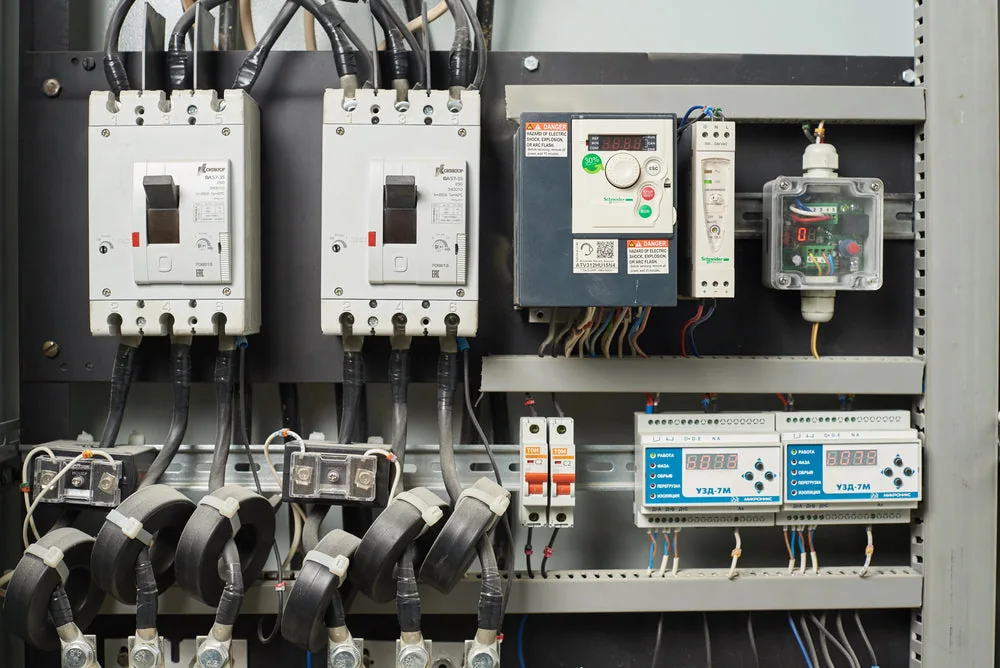
Transformer Buyers reviews used and surplus circuit breaker opportunities nationwide, including the 50 city service areas below. Share accurate equipment details, safe-access information, and lot records so each opportunity can be evaluated case by case.
01Nationwide opportunities are reviewed case by case.
02Clear labels and condition photos support review.
03Qualified personnel control de-energization and access.
04Freight planning depends on site and load details.
Complete site directory
Circuit-breaker buyers by city
Browse all 50 researched city markets. Each page addresses its own facility, seller, access and freight context while connecting back to the national buying process.
Who buys circuit breakers across these service areas?
Transformer Buyers reviews used and surplus circuit breaker opportunities nationwide, including every city listed here. Each submission is assessed case by case. Send the equipment details and access facts needed to determine whether a single breaker, spare shelf, retrofit, or decommissioning lot warrants further discussion.
This national service-area hub does not claim a branch or crew in every market. Use the directory and the [circuit breaker buyer guide](/circuit-breaker-buyers) with the [electrical equipment buyer guide](/electrical-equipment-buyers) to prepare a submission.
02
Browse the 50-city circuit breaker buyer directory
Choose the city page matching the facility, storage site, or project location. The directory organizes major U.S. markets; elsewhere, opportunities may also be reviewed when equipment records and access facts are clear.
Useful submissions commonly include identified molded-case breakers, insulated-case breakers, low-voltage power or air breakers, and drawout assemblies, as well as compatible frames, cradles, trip units, lugs, and accessories. Do not treat the category as a blanket acceptance rule. Family, ratings, completeness, age, quantity, apparent condition, and the ability to document the lot all influence whether a particular sale is worth pursuing.
Labels matter: molded-case frames cover broad current ranges, while power breakers may use separate electronic trip units and drawout hardware [4]. Similar-looking breakers need not share electrical or mechanical configurations.
New surplus, unused spares, and clean take-outs with identification intact.
Molded-case, insulated-case, air, power, drawout, and specialty breakers.
Related trip units, cradles, mounting hardware, lugs, and documented accessories.
Single units or grouped lots from upgrades, closures, inventories, or decommissioning.
04
Identify the breaker with photos and label data
Photograph the entire unit, front label, side label, terminals or connection area when safely accessible, installed position, and any crate or pallet. A readable manufacturer name and catalog or model number are the strongest starting point. UL’s marking guide notes that breakers are marked for type designation, manufacturer, voltage, and ampere rating; devices with non-5,000-A interrupting ratings are also marked with that rating [3].
Send only information that can be captured without defeating covers or exposing people to electrical hazards. Never open energized equipment, remove a live breaker, or disturb an enclosure merely to obtain a better photograph. If a label is obscured, say so and include several wide, well-lit views rather than guessing.
Manufacturer and complete catalog or model number; include suffixes.
Frame size, trip rating, number of poles, and AC or DC voltage rating.
Interrupting rating, often marked AIC or kAIC, and frequency if shown.
Thermal-magnetic or electronic trip unit, settings, and trip-unit number.
Fixed, plug-in, bolt-on, or drawout mounting details; include cradle information.
Quantity by exact item, condition, modifications, missing parts, damage, and storage environment.
05
Protect people first: authorization, de-energization, and records
Only the facility owner’s authorized, qualified electrical personnel may decide and perform isolation, removal, inspection, or packing. OSHA requires de-energization before work on or near exposed live parts and treats equipment that is de-energized but not locked or tagged as energized [2]. Keep operating equipment closed; do not use a control switch as the sole isolation.
Before a lot leaves a site, assemble the records a buyer needs to understand what it is and where it came from. Preserve, rather than erase, labels, asset tags, one-line references, test reports, maintenance history, removal dates, and photos. Disclose water exposure, fire, corrosion, damage, repairs, missing components, or uncertainty. If related oil-filled equipment or regulated material is part of the project, separate it from the breaker lot and retain applicable environmental records; EPA materials address PCB electrical-equipment recordkeeping and disposal requirements [5].
Written authorization to sell and a facility contact for access questions.
Itemized inventory, quantity counts, and label-photo file names matched to each item.
Serial or asset numbers, maintenance and test documents, and decommissioning notes when available.
Condition disclosures, including unknown history, contamination concerns, or missing components.
Clear separation of breakers from unrelated scrap, batteries, liquids, and hazardous materials.
06
Plan freight and site access for a nationwide review
Report whether equipment is loose, palletized, racked, installed, indoors, upstairs, behind security, or accessible only during a shutdown. Include dimensions and weight if known, dock or grade access, door and aisle constraints, loading resources, appointment rules, and rigging requirements. These facts help evaluate freight without promising a collection method or schedule.
The U.S. freight network joins primary routes, Interstate continuity, and urban and rural corridors that connect freight facilities [1]. Still, dense delivery windows, weather, restricted docks, rural roads, security, and packing needs can change a handling plan. Accurate access facts prevent avoidable logistics problems.
Origin city, state, ZIP code, and whether the equipment is already staged.
Photographs of pallets, room access, dock doors, stairs, elevators, and travel path.
Estimated piece and total lot weight, dimensions, and required packaging or blocking.
Loading resources available on site, plus constraints that require qualified rigging.
Never open energized equipment or remove electrical equipment solely for an inquiry. Use qualified personnel, lockout/tagout procedures and applicable site rules.
Straight answers
Questions sellers ask.
These answers are intentionally specific and conditional. Final terms depend on the equipment and written agreement.
Can I submit circuit breakers from a city that is not in the directory?+
Yes. The 50 pages organize major-city context, but Transformer Buyers reviews nationwide opportunities case by case. Provide the actual storage or project location along with the identification, condition, quantity, and access information so the location can be considered realistically.
What if the manufacturer or catalog number cannot be read?+
Send sharp close-ups and wide views of every visible marking, the handle, trip unit, mounting features, terminals, and associated enclosure label. State that the identification is incomplete. Do not infer a model from appearance or remove covers from energized equipment to search for a number.
Does a higher amp rating alone make a breaker more saleable?+
No. Ampere rating is only one part of the identification. Frame, poles, voltage, interrupting rating, trip unit, mounting style, manufacturer family, condition, completeness, and quantity can all affect whether a specific item or lot is suitable for review.
May I remove a breaker from a live panel to photograph or sell it?+
No. Do not open energized equipment or attempt removal for a sale inquiry. The facility owner should use its authorized, qualified electrical personnel and its electrical-safety procedures. OSHA requires appropriate de-energization, lockout or tagging, and verification before equipment is treated as de-energized [2].
Which documents should accompany a decommissioned breaker lot?+
Include authorization to sell, an itemized inventory, label photos, serial or asset records, one-line or panel references where shareable, maintenance and test history, removal date, and candid condition notes. Keep environmental, disposal, and contamination records available when they apply to the broader project.
What site-access information is most useful for freight planning?+
State whether the lot is installed or staged; provide pallet, piece, and total weights if known; and photograph the route from equipment to loading point. Note docks, grade-level doors, stairs, elevators, aisle limits, forklifts, rigging needs, security rules, appointment windows, and weather exposure.