Sell Circuit Breakers in Salt Lake City, UT | Equipment Buyers
Transformer Buyers reviews surplus, used, and decommissioned circuit breakers from Salt Lake City, Utah sellers. Share clear identification and site details, and we will assess the opportunity case by case through our nationwide purchasing process.
02Photos and nameplate details improve identification
03Only authorized personnel should isolate equipment
04Freight planning starts with access and weight
01
Direct answer
Who buys circuit breakers in Salt Lake City?
Transformer Buyers reviews eligible circuit-breaker inventory from Salt Lake City-area facilities through a nationwide, case-by-case purchasing process. Sellers include data centers, distributors, mining-support operations, manufacturers, and construction teams clearing projects. We assess the specific breaker, documentation, quantity, condition, and removal or freight constraints; not every item or lot will fit.
Reviewable opportunities often include boxed surplus, tested take-outs, retired switchgear breakers, maintenance spares, and project overages. Obsolete or normally operating equipment is not automatically marketable. Exact configuration, visible condition, completeness, and traceable source matter. Disclose damage, burning, moisture, or missing parts so the review reflects the inventory.
Molded-case, insulated-case, and power breakers
Low- and medium-voltage switchgear or drawout breakers
New surplus, used take-outs, spares, and project overage
02
Identify the breaker before requesting a review
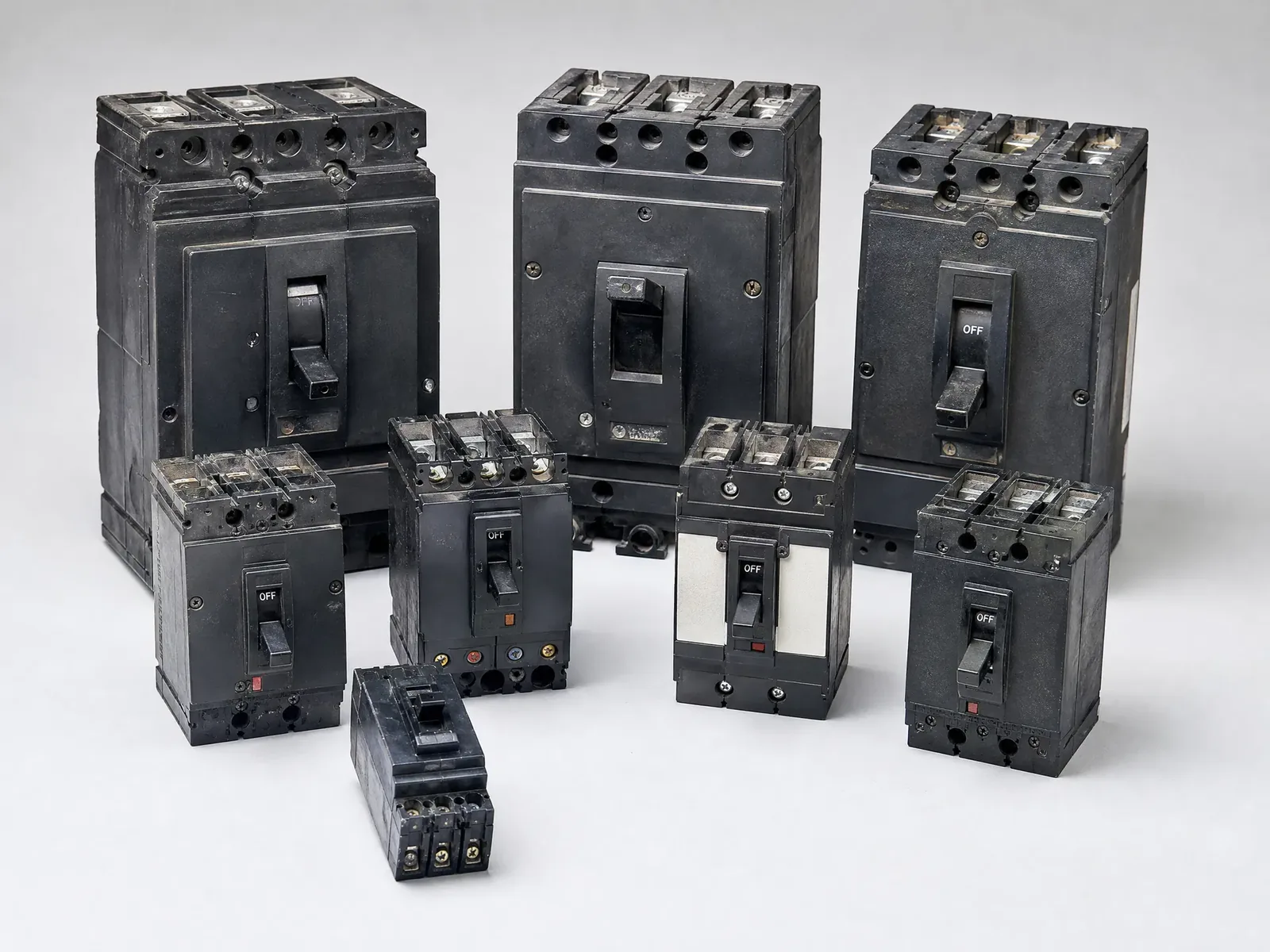
Send wide photos of the front, rear, side, labels, terminals, plug or stab area, and any damage, plus a readable manufacturer label and catalog/model number. UL notes circuit breakers are marked with a type designation or catalog number, manufacturer identity, voltage rating, and ampere rating [4]. Do not rely on handle color, enclosure size, or a panel schedule alone.
Send manufacturer; catalog/model; frame size; trip rating; pole count; AC or DC voltage; interrupting rating; trip-unit type and visible settings; and mounting details. State whether it is fixed, plug-in, bolt-on, panelboard style, or drawout. Include the cradle, cell, racking hardware, shutters, secondary disconnects, and accessories when present. Rear-stab and data-plate photos are particularly useful for drawout units.
Manufacturer and full catalog/model number
Frame and trip rating; poles and voltage
Interrupting rating and trip-unit details
Fixed, plug-in, bolt-on, or drawout configuration
03
Package useful lot records and condition evidence
Use an inventory sheet listing line items, quantities, serial numbers, site location, installed status, and known test, maintenance, or outage history. Attach packing lists, purchase records, decommissioning records, switchgear schedules, test reports, plus proof of ownership or a bill of sale when available. These support identification and transfer; they do not substitute for inspection or condition assessment.
Describe storage and condition: factory sealed, shelf stored, installed take-out, history unknown, dusty, outdoor stored, corroded, cracked, missing a cover, altered, or heat damaged. Keep boxes, manuals, labels, and accessories with their unit. Do not remove asset tags or rating labels; readable labels and honest condition photos matter more than cosmetic presentation.
Line-item count, quantity, and site location
Test, maintenance, purchase, and removal records
Photos of labels, terminals, accessories, and packaging
Plain disclosure of damage, alterations, or missing parts
04
Make de-energization and authorization the first job
Never open energized equipment or remove a breaker for a sales inquiry. The owner should assign qualified, authorized electrical personnel who follow written energy-control procedures. OSHA requires covered equipment be isolated and rendered inoperative before servicing or maintenance, and defines the authorized employee as the person who applies lockout or tagout [5]. NFPA 70E also emphasizes source identification, stored-energy control, lockout/tagout, and voltage verification with a properly rated instrument [6].
Confirm ownership, removal authority, outage window, and upstream, backfeed, generator, battery, or stored-energy sources before release. A buyer review is not an instruction to operate equipment. Leave arc-flash labels, equipment labels, and access controls intact until the responsible team completes its work. If isolation is uncertain, send only safe exterior photos and documents.
Use the site's authorized electrical personnel
Follow documented isolation and lockout/tagout procedures
Do not open or work inside energized equipment
05
Plan Salt Lake City access, freight, and removal details
Salt Lake City sellers often work around distribution, manufacturing, and logistics facilities: the City names logistics, manufacturing, and distribution as key industries and calls the area a hub for air, ground, and rail distribution [1]. Salt Lake City International Airport reports 24/7 cargo operations with direct highway and rail access [2]. This makes site-access information useful, but does not replace a site-specific freight plan or guarantee a shipment schedule.
For data-center changeouts, construction closeouts, mining-support yards, and active plants, report the address, floor, room or yard, indoor route, door size, dock, forklift or crane availability, stairs, security, appointment rules, and rigging need. Include dimensions, weight, pallet count, packaging, and site deadline. Utah's Inland Port Authority focuses on sustainable logistics solutions for the supply chain [3], but each facility has distinct access, safety, and release rules.
Address, floor, loading route, and dock details
Weight, dimensions, pallets, and packaging status
Forklift, rigging, security, and appointment constraints
06
Submit a clear, decision-ready breaker lot
Send one folder or spreadsheet with the inventory list, photos, ratings, condition notes, documents, and access summary. Group identical breakers but do not combine differing frames or trip configurations. For a large switchgear or data-center lot, provide a representative list and label each photo to its line. For small lots, complete model numbers, ratings, front-and-rear images, and condition notes may start review.
Transformer Buyers reviews nationwide opportunities individually, based on the equipment and information supplied. A complete submission reduces follow-up and separates potentially reusable inventory from material needing another disposition path. Consult the circuit-breaker buyer city directory and equipment guides, then submit facts about the actual Salt Lake City lot rather than guessing at interchangeability or value.
Match every image to an inventory line
Separate differing frames and trip configurations
Include records and an access summary
Never open energized equipment or remove electrical equipment solely for an inquiry. Use qualified personnel, lockout/tagout procedures and applicable site rules.
Straight answers
Questions sellers ask.
These answers are intentionally specific and conditional. Final terms depend on the equipment and written agreement.
Will you review a small lot of breakers from a Salt Lake City project?+
Yes. Transformer Buyers reviews nationwide opportunities case by case. Send the quantity, complete catalog numbers, ratings, photos, condition, and whether the equipment is boxed, loose, or installed so the lot can be assessed on its actual details.
What if the breaker label is faded or the model number is incomplete?+
Send sharp photos of every remaining marking, the breaker from several sides, the front handle area, terminals, and any switchgear or panel label. Do not guess at ratings. A partial identifier may help narrow the equipment family, but the uncertainty should be stated.
Do you buy breakers removed from data centers or manufacturing plants?+
Eligible surplus from data centers, manufacturing plants, distribution facilities, mining-support operations, and construction projects may be reviewed. Include the removal status, service history if known, associated gear, and site-access constraints. The equipment's specific configuration and condition matter.
Can I remove a breaker before I have all the sales details?+
Only your facility's qualified, authorized electrical personnel should determine and perform safe isolation and removal under the site's procedures. Never open energized equipment for a sales inquiry. If the breaker is still installed, exterior photos and documentation can be sent first.
What documents help establish that a breaker lot can be transferred?+
An inventory list, proof of ownership or authorized disposition, purchase or decommissioning records, maintenance or test documentation, and a bill of sale when applicable are useful. Keep serial numbers, equipment labels, accessories, and packaging associated with the correct line item.
What access details should I provide for freight planning?+
Provide the address, floor or yard location, loading route, dock or door details, estimated dimensions and weight, packaging, lift or rigging availability, security rules, appointment requirements, and the removal deadline. These facts help evaluate the practical scope without promising a pickup method or timing.