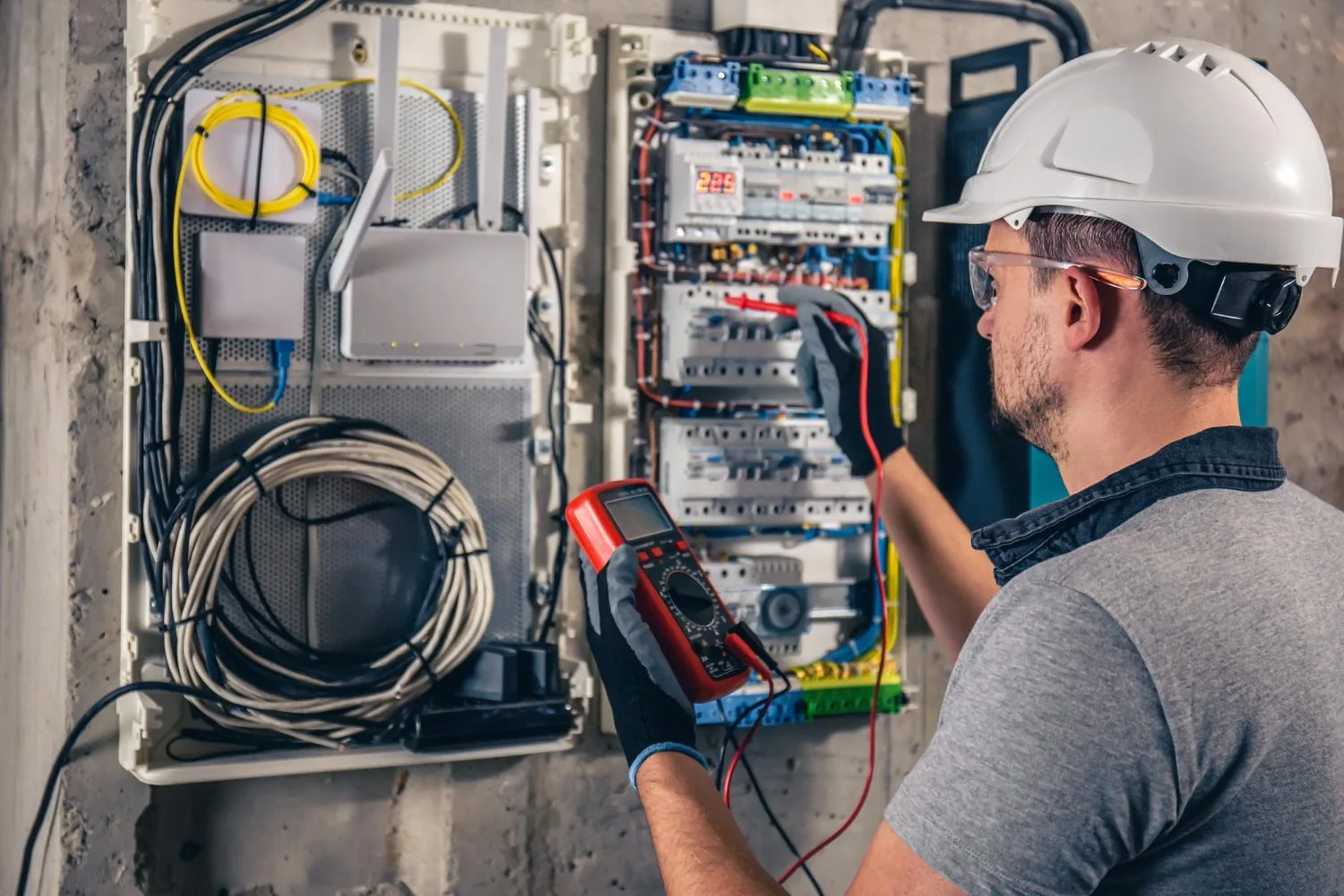
Sell Circuit Breakers in Portland, OR | Equipment Buyers
Transformer Buyers reviews surplus, used, and removed circuit breakers from Portland-area facilities. Send clear equipment details, condition, quantity, and site-access constraints; nationwide opportunities are evaluated case by case.
Transformer Buyers is a nationwide equipment buyer that reviews circuit-breaker opportunities from Portland and other markets case by case. Facility owners, electrical contractors, decommissioning teams, OEMs, distributors, and authorized asset managers can submit identifiable surplus or removed equipment. An accurate inventory lets a buyer assess the breakers, accessories, condition, and lot logistics rather than make assumptions from a location alone.
Portland equipment can arise from semiconductor-related manufacturing, fabrication support, port operations, data centers, and commercial facilities. Portland General Electric says it works with new and expanding large commercial and industrial businesses on energy goals, timelines, infrastructure, and service reliability [3]. Brand, configuration, completeness, condition, and quantity—not the city alone—determine whether a breaker is a practical resale candidate.
Single breakers, boxed spares, panelboard, and switchboard takeouts
Molded-case, insulated-case, power, miniature, and DC breakers
Drawout or fixed units with compatible trip units and accessories
02
What circuit-breaker equipment may be considered
Submit equipment that is surplus, removed through an authorized upgrade, or no longer needed. Review may include commercial distribution breakers and larger-frame equipment from switchgear, motor control, UPS, generator, process, or critical-power applications. A breaker with its correct trip unit, cradle, cell hardware, terminals, auxiliary contacts, or documentation is easier to identify than an incomplete assembly.
Do not sort a mixed lot by handle amperage alone. The same trip rating can appear in different frames, pole counts, voltage classes, interrupting ratings, and mounting styles. UL says breakers are normally marked with type designation or catalog number, manufacturer, voltage rating, and ampere rating; interrupting ratings other than 5,000 A are marked [4]. Use markings rather than asking anyone to energize or test equipment.
Complete units with readable labels and intact handles
Older or discontinued families with legible catalog markings
Trip units, rating plugs, cradles, and accessories listed separately
03
Identify the breaker before requesting a review
Photograph the front, side, labels, and accessory or trip-unit markings, with an overall image plus readable close-ups. Photograph terminals only where safely accessible after isolation. For drawout equipment, include cell or cradle identification when available. Never open, remove covers from, or handle energized equipment merely to obtain photographs.
For a shutdown, cleanout, or multibuilding project, use a count sheet. Group identical items, record room or lineup location, and flag installed equipment. If a label is worn, report it as unknown rather than supplying a presumed model.
Manufacturer, full catalog/model, frame, trip rating, and poles
AC or DC voltage and interrupting rating in kAIC or AIC
Trip unit, sensor or rating plug, documented settings, and accessories
Fixed, plug-in, or drawout mounting; cradle/cell and racking details
Exact quantity, condition, photos, packaging, and installed status
04
Safety, authorization, and condition come first
Only an owner or authorized representative should offer equipment and approve release, removal, or access. Confirm the breaker is no longer needed and coordinate the site’s electrical-safety process. OSHA identifies electrical work as a serious workplace hazard and calls attention to equipment that is de-energized but not locked out [5]. Qualified site personnel should control isolation, lockout/tagout, verification, and removal under site procedures.
Describe condition factually: sealed new surplus, shelf surplus, operational before removal, removed and untested, incomplete, damaged, wet-exposed, or for parts. Do not clean, disassemble, alter settings, or field-test an item merely to improve a listing. Safe, authorized handling comes before a faster inventory.
Confirm ownership, sale authority, and release authorization
Separate heat-damaged, corroded, incomplete, and unknown-condition stock
05
Portland freight and site-access details for breaker lots
Plan freight from the actual site. The Port of Portland reports that Terminal 6 handles containers, breakbulk, autos, and high-and-heavy project cargo, with laydown space and an eight-track on-dock intermodal yard [1]. This does not mean a particular breaker lot can use the terminal; it shows why plant, port, and downtown sellers should document loading conditions rather than assume carrier access.
Report the pickup address, floor and room, dock or grade-level exit, door and elevator limits, forklift or rigging availability, pallet-jack route, truck restrictions, hours, security, and escort requirements. At data centers, semiconductor-related operations, and active commercial sites, outage windows, chain of custody, and removal authorization may be as important as inventory. The Port notes direct rail and interstate access in its marine network [2], while shipment planning still depends on the individual site.
State whether units are loose, palletized, in switchgear, or crated
Provide dimensions and weights when known; identify estimates
Disclose stairs, narrow routes, parking limits, permits, or escorted access
06
Lot records and a case-by-case review
For one spare, send photos and markings. For a project lot, add an inventory, quantity by part number, provenance, removal date, condition, packaging status, and location. Share packing lists, maintenance history, test reports, commissioning records, or manufacturer material only when they relate to the offered equipment. Records help separate traceable stock from mixed salvage and identify accessories.
Transformer Buyers reviews submitted information nationwide to determine interest, logistics, and next steps case by case. An initial review is not a purchase promise, price guarantee, or removal commitment. Compare Portland in the city directory and consult the equipment guides for breaker categories before submitting a lot.
Manifest with one row per exact configuration
Project-appropriate ownership and release records
Never open energized equipment or remove electrical equipment solely for an inquiry. Use qualified personnel, lockout/tagout procedures and applicable site rules.
Straight answers
Questions sellers ask.
These answers are intentionally specific and conditional. Final terms depend on the equipment and written agreement.
Can I sell breakers that are still installed in a Portland building?+
Possibly, but list them as installed and do not assume removal. The owner or authorized representative must control isolation, release, and site access. Send only exterior photos and lineup information that can be collected safely; review can then consider the equipment and removal circumstances.
Which label details should I photograph?+
Photograph manufacturer, full catalog or model, frame, trip rating, poles, voltage, interrupting rating, trip unit, and mounting details. Also show serial or date codes if present, the overall breaker, and any safely accessible compatible cradle, rating plug, or accessory.
Are older or obsolete breaker families worth submitting?+
Yes, when markings are readable and condition is disclosed. Age alone does not decide interest. Exact configuration, completeness, condition, quantity, and related parts matter. State whether stock is shelf surplus, removed and untested, damaged, or incomplete rather than assuming a particular value.
What if I do not know the interrupting rating?+
Send sharp photos of every rating label and say the rating is unknown. Do not infer it from ampere rating, frame, or a similar breaker. UL notes that interrupting markings correspond to applicable voltage ratings, so the actual marking or documentation is needed for accurate identification.
Do I need to palletize a commercial or data-center lot?+
Not before submitting inventory. Disclose whether units are loose, palletized, still in equipment, or crated, along with dimensions, known weights, and access restrictions. Keep parts matched, protect labels, and do not make unsafe stacks or attempt removal without authorization.
What records help with a circuit-breaker project lot?+
A manifest, quantities by exact part number, condition notes, removal date, photographs, provenance, and available packing or maintenance records are useful. Include facility location and access constraints. Documentation should support the offered items, not imply testing, ownership, or compatibility that cannot be verified.