Sell Circuit Breakers in Pittsburgh, PA | Equipment Buyers
Have surplus, removed, or serviceable breakers in Pittsburgh? Transformer Buyers reviews eligible circuit-breaker opportunities nationwide, case by case. Start with clear equipment details, condition notes, and honest site-access information so a buyer can evaluate the lot responsibly.
01Purchase reviews are handled case by case nationwide.
02Nameplate and trip-unit photos make identification faster.
03Only authorized, qualified personnel should isolate electrical equipment.
04Loading access and documentation affect a practical equipment review.
01
Direct answer
Who buys circuit breakers in Pittsburgh?
Transformer Buyers buys surplus and used circuit breakers from Pittsburgh-area owners, contractors, plant managers, facilities teams, and other authorized sellers when the equipment and transaction fit our review. We review nationwide opportunities case by case; a Pittsburgh address does not establish dedicated in-city staffing, automatic pickup, or a preset offer.
Pittsburgh is a sensible market to organize breaker inventories carefully. The regional economic-development alliance describes an advanced-manufacturing base spanning advanced materials, additive manufacturing, robotics integration, coatings, chemicals, and next-generation metals. Carnegie Mellon’s Robotics Institute adds a prominent university research setting, while health-system campuses, laboratories, and industrial facilities can periodically retire, modernize, or consolidate distribution equipment. Those contexts make complete, traceable equipment records more useful than a vague list of “breakers.”
02
What circuit breakers may be worth submitting?
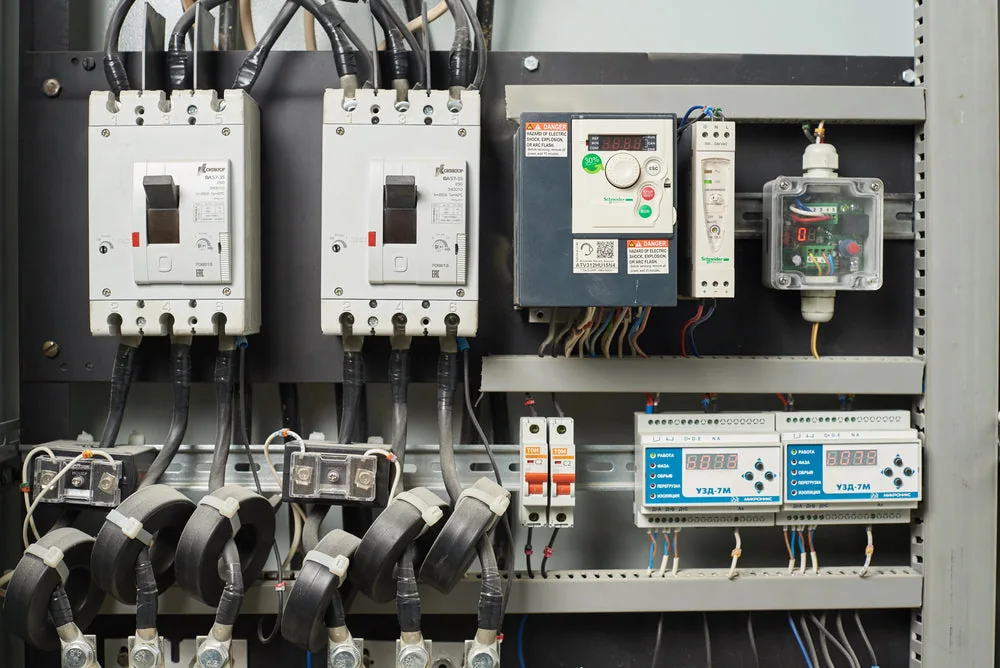
Review candidates can include molded-case breakers, insulated-case breakers, low-voltage power circuit breakers, air circuit breakers, medium-voltage vacuum breakers, drawout units, feeder breakers, panelboard breakers, and complete breaker lineups offered as documented lots. Brand, age, rating, completeness, condition, and the ability to verify what is being offered all matter. An enclosure or switchboard may have value as part of a broader project, but do not assume every installed device is a purchase fit.
Pittsburgh sellers may encounter equipment released from manufacturing expansions, robotics cells, research and university projects, hospital renovations, commercial upgrades, or industrial maintenance stores. Separate equipment that is merely idle from equipment that is damaged, incomplete, obsolete, wet, contaminated, or still required for service. A mixed lot can still be reviewed, but calling out exclusions prevents a usable breaker from being confused with scrap or unsupported components.
Group identical breakers by manufacturer, catalog number, rating, and quantity.
Keep loose trip units, cradles, and hardware labeled to their parent breaker.
Flag cracked cases, corrosion, missing parts, heat evidence, or water exposure plainly.
03
How do I identify a breaker before requesting a review?
Use the maker’s nameplate and the front label as the starting point. Photograph the entire breaker, the catalog or model number, the frame rating, the trip or ampere rating, the number of poles, nominal voltage, and interrupting rating. For electronic-trip equipment, capture the trip-unit face, settings label, and any visible rating plug. For power or medium-voltage breakers, include front and rear views, mechanism condition, cell or drawout position, racking interface, shutter arrangement, and secondary-contact details.
Send the information in a small spreadsheet or a labeled photo folder, not a single distant room photograph. State manufacturer, catalog/model, frame, trip rating, poles, voltage, interrupting rating, trip unit, mounting or drawout details, quantity, and condition for each line. Add serial numbers, date codes, and enclosure or switchgear identifiers when available, but avoid publishing sensitive facility drawings or access credentials.
Wide photo: front, side, rear, terminals, and any damage.
Close photo: nameplate, catalog number, trip unit, and rating plug.
Lot record: quantity, storage location, ownership status, and known history.
04
Safety, authorization, and condition come before resale
Never open energized equipment, reach into a live lineup, remove covers, or attempt to rack a breaker solely to create photos. Only the facility owner or another authorized seller should approve disposition, and only qualified personnel working under the site’s electrical-safety procedures should isolate, verify, remove, or prepare equipment. OSHA requires safe procedures for deenergizing circuits and equipment to be determined before deenergizing, a useful baseline for any removal plan.
Document the breaker’s condition as observed: installed, disconnected, removed, stored indoors, stored outdoors, tested, untested, damaged, or parts-only. If there was a fault event, flood, fire, chemical exposure, recall notice, or known operational issue, disclose it. Do not substitute an assumed rating, bypass interlocks, modify a trip unit, or conduct energized inspection for a resale inquiry.
05
What records should accompany a Pittsburgh breaker lot?
A credible lot file identifies the legal owner or authorized representative, site city and state, asset or work-order reference, quantity, equipment list, and release status. Include maintenance summaries, test records, commissioning documentation, repair history, purchase records, and manufacturer literature when they exist. These documents do not guarantee resale suitability, but they help a reviewer understand provenance and whether ratings, accessories, and condition statements can be checked.
For switchgear projects, identify the lineup section, breaker position, frame or cell size, and whether the breaker is fixed-mounted or drawout. Photograph cradles and mating parts separately. Keep removed components with their labels and do not combine parts from different ratings just to create a complete-looking assembly. If environmental concerns apply, preserve related records and use qualified compliance professionals; EPA guidance addresses PCB waste storage and disposal, particularly relevant to some older electrical equipment and project cleanouts.
06
Freight and site access in the Pittsburgh area
Share the real loading conditions early: floor level, dock availability, door dimensions, stairs, elevator limits, forklift or crane availability, palletization, weight estimates, hours, required appointments, union or site rules, badges, escorts, parking, and whether equipment is already disconnected. Pittsburgh’s hills, dense institutional areas, secured campuses, river-adjacent industrial sites, and older buildings can make a technically suitable lot harder to move than its inventory sheet suggests.
The Port of Pittsburgh Commission promotes commercial use of the region’s inland waterways and notes that barge freight can reduce highway and rail traffic. That regional freight setting is useful context, but it does not determine how any individual breaker lot will be collected or transported. Describe whether the equipment is packaged and accessible to conventional freight rather than assuming a particular pickup method.
For larger lots, provide a simple staging plan and confirm who is authorized to release equipment at the site. Photos of the route from storage to loading point are often more informative than an address alone. Transformer Buyers can then assess the opportunity case by case with the equipment data, authorization status, and practical site facts in view.
Never open energized equipment or remove electrical equipment solely for an inquiry. Use qualified personnel, lockout/tagout procedures and applicable site rules.
Straight answers
Questions sellers ask.
These answers are intentionally specific and conditional. Final terms depend on the equipment and written agreement.
Can I sell breakers that were removed during a Pittsburgh renovation?+
Possibly, if you are authorized to sell them and can document what was removed. Send manufacturer and rating photos, quantities, condition notes, accessories, and the actual storage and access situation. A renovation origin alone does not establish purchase suitability.
What photos should I send for a drawout breaker?+
Include front, side, rear, nameplate, trip unit, rating plug, terminals, racking interface, secondary contacts, cradle, shutters, and visible damage. Photograph each differing catalog number separately; one image should show the complete unit and matching accessories.
Do I need to test a breaker before submitting it?+
Do not perform testing or energized work merely for a resale inquiry. Share existing test or maintenance records if available, and accurately identify equipment as tested, untested, or damaged. Any electrical work should be approved and performed by qualified personnel under site procedures.
Will you review a mixed lot of industrial and panelboard breakers?+
Yes, a mixed lot can be submitted for review. Separate it by manufacturer, catalog number, rating, quantity, and condition, then identify loose parts and exclusions. Clear sorting allows the reviewer to understand which items may fit rather than treating the entire lot as one unknown category.
What if the breaker nameplate is worn or missing?+
Send sharp photos of all remaining markings, the breaker front and rear, trip unit, mounting arrangement, adjacent labels, and any matching documentation. Do not estimate critical ratings. Missing identification can limit evaluation because safe, accurate configuration verification becomes more difficult.
Can a hospital, university, or robotics facility submit surplus electrical equipment?+
Yes, authorized representatives can submit equipment for a case-by-case review. Include release authorization, security or access requirements, electrical-safety restrictions, inventory data, and a truthful description of condition. Critical-load facilities should prioritize their own decommissioning and safety procedures over any resale process.