Sell Circuit Breakers in Phoenix, AZ | Equipment Buyers
Transformer Buyers reviews Phoenix circuit breaker opportunities nationwide, case by case. Send clear equipment details, condition, and removal-access information so we can determine whether your surplus, used, or project-takeout breakers fit an active buying need.
03Only authorized personnel should isolate equipment.
04Access and loading details affect logistics planning.
01
Direct answer
Who buys circuit breakers in Phoenix?
Transformer Buyers buys and evaluates surplus, used, and takeout circuit breakers from Phoenix-area owners, contractors, facilities teams, electrical distributors, and liquidation managers. We review nationwide opportunities case by case rather than representing a Phoenix office or a fixed local service area. A practical first step is to send the nameplate, photos, quantity, condition, and location details; those facts help determine whether the equipment is identifiable, marketable, and feasible to handle.
Phoenix sellers often encounter breakers during tenant improvements, capacity upgrades, shutdowns, data-center refreshes, warehouse expansions, manufacturing changes, and construction closeouts. Greater Phoenix is an established semiconductor hub with major manufacturers and a large related workforce, while the Arizona Commerce Authority reports extensive statewide semiconductor investment since 2020. That activity can leave legitimate surplus from staged buildouts and specification changes, but a breaker’s actual configuration—not its original project—is what drives an evaluation. See the [circuit breaker buyer city directory](/circuit-breaker-buyers) for other markets and the [circuit breaker equipment guides](/circuit-breakers) for category context.
02
Circuit breakers and related gear worth documenting
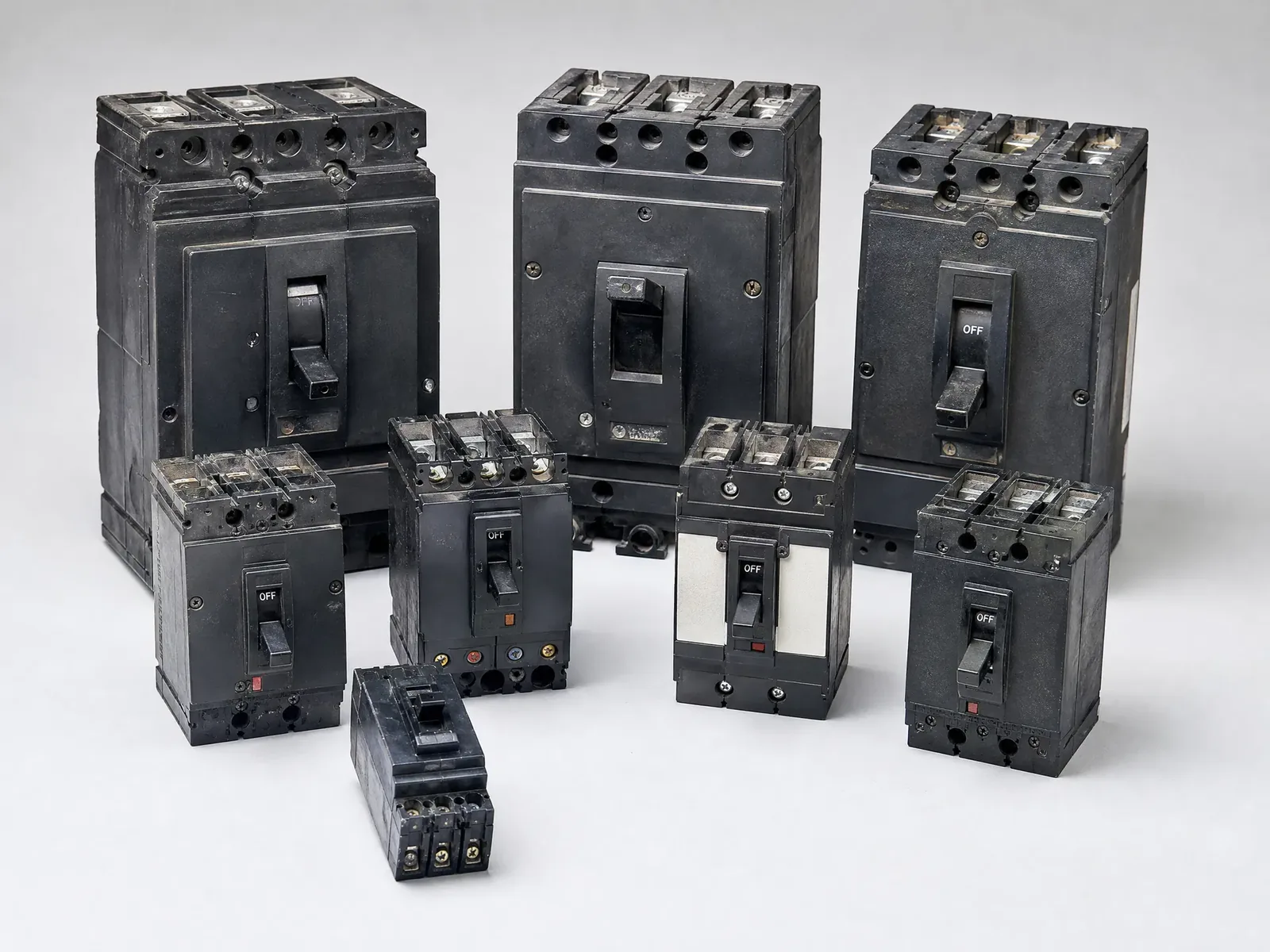
Potential opportunities can include molded-case circuit breakers, insulated-case breakers, low-voltage power breakers, air circuit breakers, molded-case switches, bus plugs, panelboard breakers, and breaker assemblies removed from switchgear. New surplus in sealed packaging, current production equipment, complete drawout breakers, and grouped inventory with clear labels are generally easier to assess than loose, mixed, or altered pieces. Obsolete units can still merit review when the exact catalog number, trip unit, accessories, and condition are known.
Do not assume every breaker in a cabinet is the same. Similar handle ratings can conceal differences in frame, trip, poles, voltage, interrupting rating, mounting, trip functions, or accessories. Original cartons, labels, test records, and matching cradle or cell information improve identification. Describe a breaker separately from its enclosure, bus, switchboard, or switchgear.
Molded-case, insulated-case, low-voltage power, and air circuit breakers
Fixed-mount, plug-in, drawout, and panelboard configurations
Surplus stock, serviceable pulls, project takeouts, and documented liquidation lots
03
Identify each breaker before requesting a review
Use the manufacturer label or nameplate, not a visual guess, as the primary identifier. Photograph it straight on in good light and capture the entire catalog or model number. Include the manufacturer, catalog/model, frame rating, trip rating, number of poles, voltage, interrupting rating, trip-unit type, and any suffixes. For electronic units, photograph the trip-unit face and settings only after the equipment has been made safe by qualified, authorized personnel under the site’s procedures.
State whether the breaker is fixed, plug-in, or drawout and whether it includes a cradle, cell, racking hardware, lugs, shunt trip, undervoltage release, auxiliary contacts, or interlocks. For drawout equipment, photograph the front, rear, stabs, and cradle label. Do not remove covers, rack a breaker, defeat interlocks, or open energized equipment for photos. If a label is unreadable, send close-ups beside a ruler and all markings rather than filling gaps from memory.
04
What Phoenix sellers should send for a usable lot review
A concise inventory sheet paired with photographs helps avoid mismatches. List one line per catalog number, grouping units only after confirming ratings and accessories match. State whether each is new surplus, used serviceable, removed, damaged, incomplete, untested, or as-is. Disclose heat, water, corrosion, broken terminals, missing covers, altered wiring, modifications, or unavailable accessories rather than using optimistic condition labels.
Add the quantity, whether items are loose or palletized, carton dimensions when available, and approximate total weight. For a project closeout, identify the owner or authorized seller, the facility address or general site area, release date, and whether lien, lease, return, or utility restrictions have been cleared. Purchase orders, packing lists, asset tags, maintenance records, test documentation, and decommissioning records can establish provenance and reduce follow-up. Do not share sensitive security drawings or controlled facility information that is not needed for identification.
Nameplate and full-unit photos, plus catalog number and quantity
Frame, trip, poles, voltage, interrupting rating, trip unit, and mounting details
Condition, documentation, ownership authorization, packaging, weights, and release constraints
05
Safety, authorization, and de-energization come before sale
A possible sale does not change the electrical safety rules at your site. The facility owner should authorize removal, and only qualified, authorized personnel working under the employer’s established energy-control program should isolate equipment. OSHA explains that electrical and other hazardous energy can seriously injure or kill workers if not controlled and identifies lockout/tagout procedures as safeguards during servicing. Never advise a buyer, driver, or unqualified employee to verify, remove, disconnect, or open energized equipment.
Before any handling discussion, confirm the equipment’s energized status through the site’s documented process and identify who controls access. Retain lockout/tagout records, clearance requirements, arc-flash boundaries and labels, permit requirements, and utility or landlord approvals as applicable. A breaker that cannot be safely accessed may still be described for review, but no valuation inquiry should pressure a facility to accelerate a shutdown or bypass its rules. Photos can be taken only from safe, authorized positions.
06
Phoenix access and freight planning for breaker lots
Phoenix’s development pattern makes logistics details consequential. The region supports semiconductor operations, data centers, warehouses, and manufacturing, and the Maricopa Association of Governments coordinates freight-network work intended to support economic growth. Fast construction and active facilities can mean controlled gates, contractor traffic, reserved loading windows, or restricted staging—not a simple curbside collection. State the city area, building type, and available release window without publishing sensitive site details.
Describe whether freight can reach a dock, grade door, ground-level bay, laydown yard, or only an interior electrical room. Provide dock height, forklift or pallet-jack availability, elevator dimensions if relevant, aisle and doorway limits, trailer restrictions, required personal protective equipment, scheduling contacts, and whether a rigging contractor is required. Desert heat, summer weather exposure, and outdoor staging also matter: protect labeled equipment from sun, dust, moisture, and rough handling, and avoid leaving breakers unsecured. These facts allow a realistic case-by-case logistics assessment; they are not a promise of pickup or a committed schedule.
Never open energized equipment or remove electrical equipment solely for an inquiry. Use qualified personnel, lockout/tagout procedures and applicable site rules.
Straight answers
Questions sellers ask.
These answers are intentionally specific and conditional. Final terms depend on the equipment and written agreement.
Can I sell breakers removed from a Phoenix semiconductor or data-center project?+
Possibly. Send exact identifiers, quantities, condition, release authorization, and access facts. Project origin alone does not establish suitability; complete drawout, trip-unit, accessory, and documentation details are especially important.
What if my circuit breaker does not have a readable nameplate?+
Send sharp photos of every marking, the front, sides, rear connections, mounting features, and accessories. Include dimensions and any carton, asset, or panel schedule references. Do not disassemble or expose energized gear to search for data.
Do used or untested circuit breakers qualify for review?+
They can be reviewed, but state their condition accurately. Note removal history, storage conditions, damage, testing records, modifications, missing parts, and whether the equipment is offered as-is. Evaluation depends on the specific unit and market need.
Do I need permission before offering electrical equipment for sale?+
Yes. Confirm that the owner or authorized seller has the right to release the equipment and that lease, utility, lien, return, environmental, and site-security obligations are addressed before removal or shipment.
Should I de-energize a breaker so I can photograph or remove it?+
Only your facility’s qualified, authorized personnel may make that decision and follow the applicable energy-control process. Never open energized equipment or bypass normal safety and authorization requirements for a sale inquiry.
What delivery or pickup details should I include for a Phoenix breaker lot?+
Provide the general location, floor or yard position, dock or grade-door access, loading equipment, packaging, weights, hours, security rules, and any rigging or appointment constraints. Transformer Buyers reviews those logistics case by case.