Sell Circuit Breakers in Fresno, CA | Equipment Buyers
Have surplus or removed circuit breakers in Fresno? Transformer Buyers reviews nationwide opportunities case by case, including industrial lots from food processing, cold storage, agriculture support, manufacturing, and distribution facilities. Identification, safe removal records, and loading details help determine whether a breaker or lot is a fit for review.
01Nationwide opportunities are reviewed case by case.
02Photos of labels and both sides reduce identification gaps.
03Do not open or remove equipment while energized.
04Pallets, skids, and dock details aid freight planning.
01
Direct answer
Who buys circuit breakers in the Fresno market?
Transformer Buyers is a nationwide equipment buyer that reviews circuit-breaker opportunities from Fresno sellers on a case-by-case basis. We consider single units, maintenance spares, shutdown inventories, panelboard takeouts, and larger electrical lots when the identification, condition, ownership, and handling information make an informed review possible. A submission is a request for evaluation, not an automatic offer or a commitment to purchase.
Fresno is a sensible place to organize surplus carefully. The City identifies food processing, advanced manufacturing, and logistics among its growth industries, while Fresno County describes agriculture and food processing, heavy manufacturing, and transportation and logistics as established regional clusters [1] [2]. Those settings can produce breakers from motor-control upgrades, refrigeration projects, warehouse changes, equipment replacement, and plant consolidations. Buyers need the particulars of each device rather than an assumption based on the facility type.
02
What circuit breakers may be worth submitting
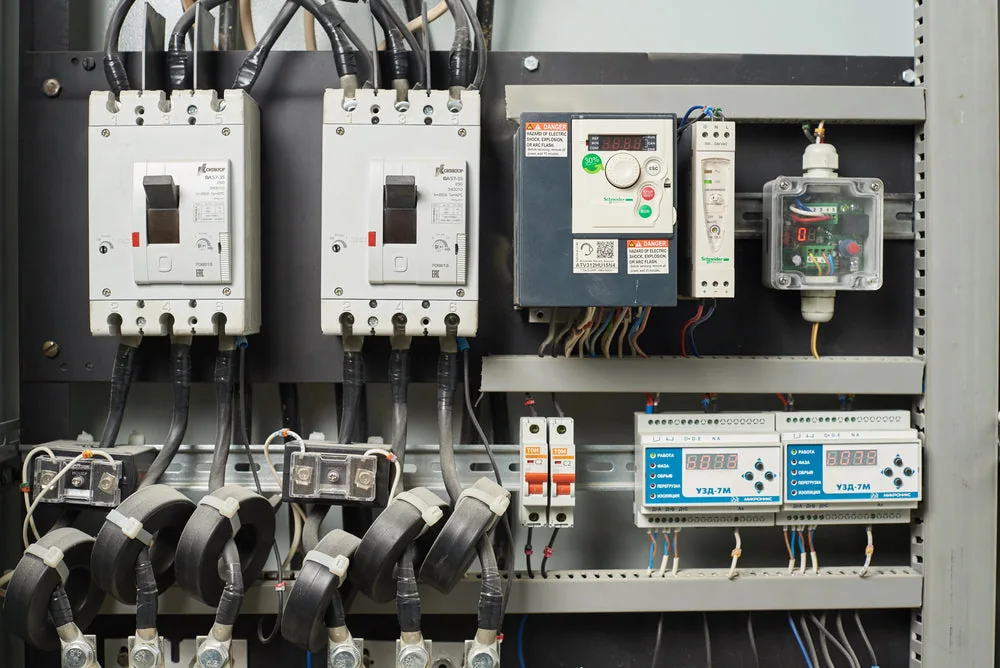
Send the actual equipment details before deciding an item is too old, too small, or unsuitable. Opportunities can include surplus new-in-box breakers, clean used molded-case breakers, insulated-case breakers, low-voltage power breakers, drawout units, feeder breakers, and compatible accessories such as trip units, cradles, and disconnect hardware. Completeness matters: a breaker with its correct trip unit, terminals, and mounting hardware is easier to assess than an unidentified loose body.
A circuit breaker is not identified by amperage alone. Manufacturer markings and catalog information distinguish frame family, trip arrangement, voltage class, interrupting rating, poles, and mounting format. NEMA maintains a dedicated standard category for molded-case circuit breakers, molded-case switches, and their enclosures [5]. Photograph the rating label rather than relying on a handwritten description, especially when several breakers look alike.
Manufacturer and full catalog or model number
Frame size and ampere trip rating
Number of poles and voltage rating
Interrupting rating, including any suffixes
Electronic, thermal-magnetic, or other trip-unit details
Fixed, plug-in, bolt-on, or drawout mounting
Included lugs, terminals, cradle, or accessories
Quantity by identical catalog number
New, used, tested, removed, damaged, or incomplete condition
03
Build a useful photo and data package
Start with a sharp, readable image of every label. Then add front, rear, side, terminals, trip unit, and any damage or corrosion. For a drawout breaker, show the primary stabs and the cradle or cell information if it is included. For boxed stock, photograph the unopened carton label and the breaker label when safely available; do not represent cartons as new if seals are broken or history is unknown.
For Fresno food, refrigeration, agricultural-support, and distribution sites, separate one catalog number from another before counting. A short spreadsheet or inventory list should state manufacturer, catalog/model, frame, trip rating, poles, voltage, interrupting rating, trip unit, mounting or drawout details, quantity, and condition. Include whether the breaker was a spare, in service before removal, or removed during a project. That record lets a reviewer compare like with like and ask focused follow-up questions.
04
Make electrical safety and authorization the first step
Never open energized equipment, defeat interlocks, or attempt to remove a breaker from live gear for photographs or sale. Electricity presents shock, electrocution, fire, and explosion hazards, and OSHA directs employers to control electrical hazards through safe work practices and related protective measures [4]. Facility management should use its own electrical safety procedures, shutdown plan, and qualified or otherwise properly authorized personnel before a device is accessed or removed.
Before submitting a removed lot, confirm who owns it and who is authorized to release it. Record the site contact, equipment location, removal date, and whether the device was taken out during an approved decommissioning, modernization, or maintenance project. If a contractor performed the work, retain the applicable release or transfer documentation. Do not power up, test, disassemble, or alter a breaker solely to prepare it for a buyer review.
05
Document condition, lot history, and completeness
Condition statements should be specific and conservative. Note cracked cases, missing arc chutes, heat marks, corrosion, broken handles, water exposure, missing labels, altered terminals, or absent trip units. If a breaker has been electrically tested, identify the test provider, date, method, and available report; if it has not been tested, say so. A truthful condition summary is more useful than an unsupported claim that an item is working.
For plant clear-outs, keep photos tied to pallet or skid numbers and list the count per pallet. Include packing lists, purchase records when available, decommissioning paperwork, and any OEM or service documentation that belongs with the lot. This approach is particularly useful when refrigeration, conveyor, packaging, processing, or warehouse projects produce mixed electrical gear. It helps distinguish circuit breakers from contactors, fuses, switches, and unrelated scrap.
06
Plan freight and site access before requesting pickup options
Fresno County's strategy notes the area's major-highway and rail-corridor access for food processing and distribution, and the city emphasizes transportation links for manufacturing and logistics [1] [2]. Fresno Yosemite International Airport also reports daily FedEx and UPS cargo service and access by two highway routes [3]. These facts describe the regional operating context, not a promise that any lot can move by a particular method or schedule.
Tell the reviewer whether equipment is loose, boxed, palletized, rack-stored, indoors, on a mezzanine, or still in a de-energized lineup. Provide estimated weights and dimensions when known, dock or grade-level access, forklift availability, loading hours, required appointments, security procedures, and any space limits for a truck. Keep breaker faces protected, immobilize drawout mechanisms as appropriate to the equipment, and package loose accessories with their matching unit. Freight, site access, lot size, and condition are reviewed case by case. For broader geography and equipment guidance, see the Circuit Breaker Buyers directory and the related equipment guides below.
Never open energized equipment or remove electrical equipment solely for an inquiry. Use qualified personnel, lockout/tagout procedures and applicable site rules.
Straight answers
Questions sellers ask.
These answers are intentionally specific and conditional. Final terms depend on the equipment and written agreement.
Can I submit one surplus circuit breaker from a Fresno facility?+
Yes. Send the label photos, catalog number, ratings, condition, and quantity even when the quantity is one. Transformer Buyers reviews nationwide opportunities case by case; whether a single device is a fit depends on the specific breaker and the information available.
What information is most important for a buyer to see?+
The manufacturer, catalog/model number, frame, trip rating, poles, voltage, interrupting rating, trip unit, mounting or drawout format, quantity, and condition are the core details. Clear photos of labels, terminals, and included accessories help verify the written list.
Should I remove a breaker from a live panel to photograph it?+
No. Do not open energized equipment or remove equipment from live gear for a sale inquiry. Use the facility's established electrical safety and authorization procedures, and have qualified or properly authorized personnel address shutdown, access, and removal decisions.
Do food-processing or cold-storage breakers need special documentation?+
The same identification and condition records apply, but mixed project lots benefit from stronger traceability. Keep pallet counts, removal dates, ownership or release documentation, photos, and any service or test records so the circuit breakers can be separated from other controls and materials.
Can I send breakers that are used, incomplete, or damaged?+
You can submit them for review if you describe their condition accurately. Show missing components, corrosion, cracks, heat damage, modifications, and label condition in photos. Do not assume an incomplete or damaged breaker has a particular value; suitability is evaluated individually.
What site-access details should I provide for a larger Fresno lot?+
State the storage location, pallet count, estimated weights and dimensions, dock or grade-level access, forklift availability, loading hours, appointment requirements, and truck restrictions. Those details support practical freight planning but do not create a pickup or timing commitment.