Sell Circuit Breakers in Riverside–San Bernardino, CA | Equipment Buyers
Transformer Buyers reviews surplus circuit-breaker opportunities from Riverside–San Bernardino warehouses, distribution centers, plants, construction projects, and inland-freight facilities on a nationwide, case-by-case basis. Send clear identification, condition, ownership, and site-access details so the equipment can be evaluated realistically before anyone plans removal or freight.
01Nationwide opportunities are reviewed case by case.
02Nameplate details make identification faster.
03Authorized de-energization comes before removal.
04Dock and access details shape freight planning.
01
Direct answer
Who buys circuit breakers in Riverside–San Bernardino?
Transformer Buyers reviews circuit-breaker opportunities from Riverside–San Bernardino, case by case. Sellers may have surplus, removed, or serviceable equipment from warehouses, distribution centers, manufacturing lines, construction closeouts, and freight facilities. Review turns on breaker family, ratings, condition, quantity, documentation, and site access—not an item's surplus label.
Riverside County Economic Development identifies logistics as a priority sector while discussing surplus warehouse reuse and advanced-manufacturing potential. San Bernardino County describes industrial-space development and goods movement. Such change can produce excess inventory, but requires records that separate reusable breakers from installed gear, parts, and regulated material.
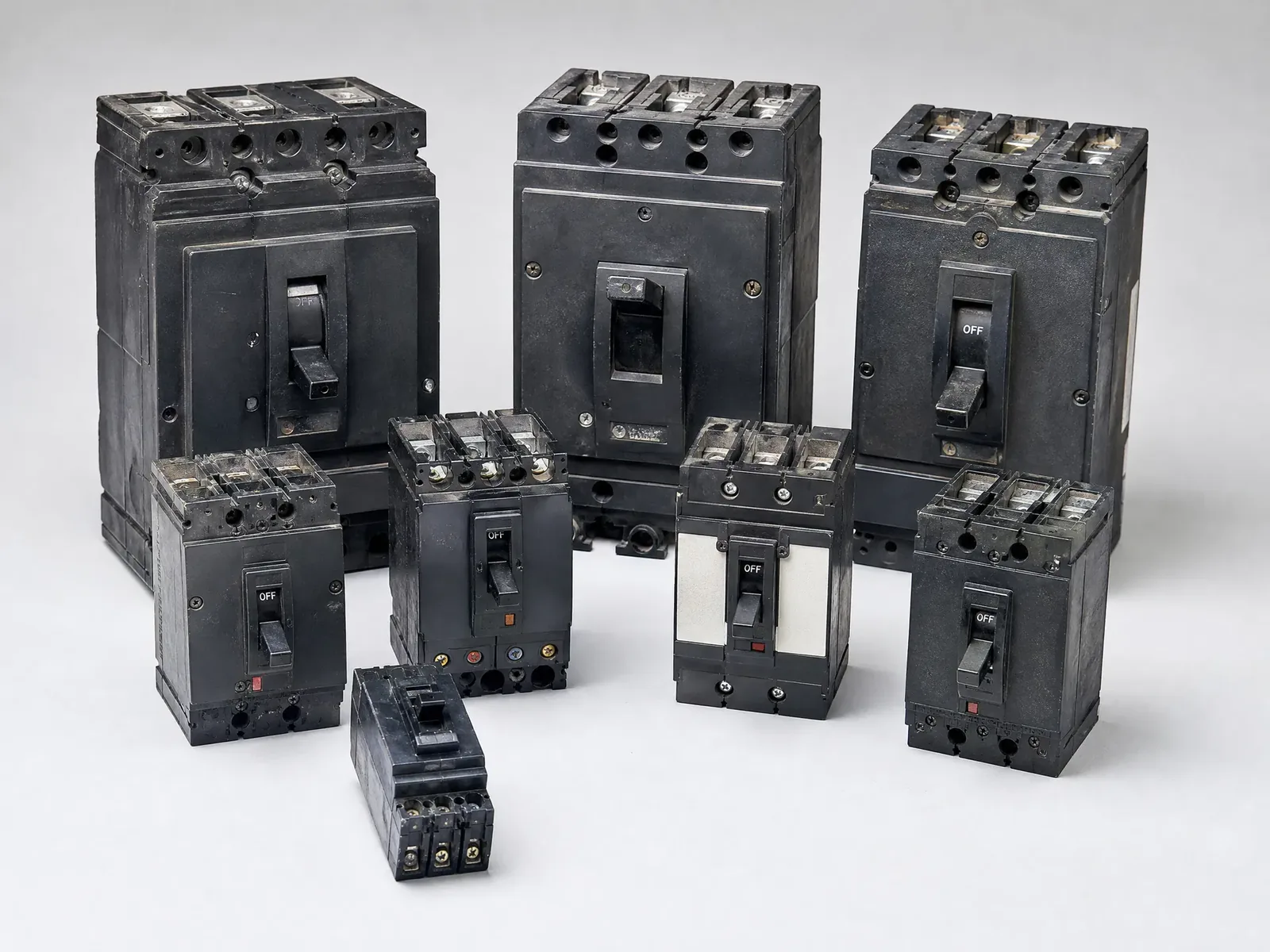
Molded-case, insulated-case, low-voltage power, air, and drawout breakers may be reviewed.
Complete breakers, trip units, cradles, shutters, hardware, and factory packaging should be identified separately.
A large mixed lot can be considered, but each family and condition group should be described clearly.
02
Identify the breaker before requesting a review
Begin with the nameplate and exterior, not assumptions based on panel location or handle size. Manufacturer and catalog or model number usually identify the product family. Frame rating is not automatically trip rating: a frame can support a different installed trip or sensor. Poles, voltage, interrupting rating, and trip-unit type matter. Photograph readable labels and accessory labels instead of transcribing uncertain characters.
For an installed breaker, state whether it is fixed-mounted, plug-in, or drawout and whether its matching cradle or cell remains with it. Show front, side, line/load-terminal, and nameplate views only when they can be taken under the site’s electrical-safety rules. If labels are worn, include a wide view of the enclosure and adjacent identifiers; do not guess a catalog number.
Identify the trip unit, including thermal-magnetic or electronic type, sensors, settings, and any visible accessories.
State mounting and drawout details, quantity by identical item, and condition: new surplus, used, removed, damaged, untested, or for parts.
Include sharp nameplate photos plus exterior, terminals, connectors, cradle, and packaging photos where applicable.
03
Put safety and authorization ahead of salvage
Do not open, probe, rack, remove covers from, or photograph inside energized equipment. The owner or responsible employer should use its written electrical-safety and hazardous-energy procedures, and only qualified, authorized personnel should isolate, lock out, verify, and remove equipment when removal is appropriate. OSHA explains that electrical and other stored energy can cause severe injury or death when it is not properly controlled; lockout/tagout responsibilities belong with the employer’s program and trained workers.
A seller should also establish authority before a breaker is offered. Confirm who owns the inventory, whether the lease or project contract permits disposition, and whether a utility, inspector, lender, insurer, or customer has a claim. Keep equipment in a secure, dry location after authorized removal. Do not represent tested, operational, listed, or complete status unless you have records supporting that statement.
Record the site contact, asset owner, removal authorization, and any access or work-permit constraints.
Keep lockout/tagout, commissioning, maintenance, and removal records with the lot when available.
Flag damaged insulation, heat marks, water exposure, missing terminals, altered labels, or unavailable accessories honestly.
04
Build a lot record that answers practical questions
A useful lot sheet groups identical units and separates uncertain items. List quantity, location, visible serial number, project context, and whether each breaker is loose, installed, palletized, or mixed with switchgear. Attach packing lists, purchase records, one-lines, test reports, maintenance history, and photos when available. These materials distinguish a documented excess lot from unidentified parts.
Include environmental or disposal information when it applies to the surrounding equipment. Circuit breakers themselves are not automatically the same concern as oil-filled apparatus, but older electrical assemblies can contain components or materials requiring special handling. EPA notes that PCBs may be present in older electrical equipment and that states may have requirements beyond federal rules. Preserve labels, manifests, test results, and project records; do not discard them to simplify a sale.
Use one row per catalog number and condition group, with an exact count and photo file names.
Mark equipment that is incomplete, modified, contaminated, damaged, or restricted from resale.
Describe what is included: lugs, mounting hardware, plugs, barriers, cradles, manuals, cartons, and pallets.
05
Plan freight around Inland Empire site access
Riverside–San Bernardino lots often sit in warehouses, distribution centers, manufacturing sites, construction areas, or freight yards where access is as important as the equipment list. The City of San Bernardino describes connections at I-10, I-215, and SR-210, rail access, San Bernardino International Airport, Ontario International Airport, and proximity to the Los Angeles/Long Beach ports. That connectivity can help frame a shipping plan, but it does not replace a site-specific review of gates, appointments, traffic controls, truck restrictions, or jobsite rules.
Before arranging transportation, provide the pickup city, floor or yard location, dock height, forklift or crane availability, pallet count, approximate dimensions and weights, loading hours, security check-in, escort rules, and whether a trailer can safely enter and turn. For construction sites, describe project phase, staging space, union or permit conditions, and who may release the material. A freight quote or route cannot be responsibly inferred from a city name alone.
Say whether equipment is loose, banded, crated, racked, on pallets, or attached to switchgear.
Identify loading responsibility, safe lifting points, dock or grade-level loading, and required personal protective equipment.
Photograph access routes and packaging only when permitted and without exposing confidential operations.
06
Submit a clear Riverside–San Bernardino opportunity
Package photos, the lot sheet, ownership status, condition notes, and access details in one inquiry. Start with the largest or clearest breaker groups, then list uncertain items separately. Transformer Buyers may need clarification before deciding whether a nationwide opportunity fits. An inquiry is not a commitment, price guarantee, removal authorization, or freight arrangement.
For broader planning, sellers can browse the [circuit breaker buyer city directory](/circuit-breaker-buyers) to find market-specific context and use the [circuit breaker equipment guides](/circuit-breaker-guide) to organize identification details. Those resources support a better inquiry, but the physical nameplate, condition, documentation, and site facts remain the basis for evaluating the actual equipment.
Never open energized equipment or remove electrical equipment solely for an inquiry. Use qualified personnel, lockout/tagout procedures and applicable site rules.
Straight answers
Questions sellers ask.
These answers are intentionally specific and conditional. Final terms depend on the equipment and written agreement.
Can I sell breakers removed from a Riverside or San Bernardino warehouse?+
Potentially. Provide the manufacturer, catalog number, ratings, quantity, condition, removal status, and photos. The lot is reviewed individually; warehouse origin alone does not establish suitability or value.
What if my breaker has a frame rating but no clear trip rating?+
Photograph the frame label, trip unit or sensor label, front face, and catalog number. Describe any adjustable settings without changing them. Do not assume that the frame rating is the installed trip rating.
Do I need to remove circuit breakers before I ask for a review?+
No. Send exterior and nameplate information first when it is safe and permitted. Removal must be authorized and handled under the facility’s electrical-safety and hazardous-energy procedures.
How should I describe a mixed construction closeout lot?+
Create separate lines for each manufacturer, catalog number, rating, pole count, and condition. Note unopened cartons, loose units, missing pieces, project ownership, and the exact quantity of each group.
What pickup details matter at a distribution center or freight yard?+
Share gate rules, appointment requirements, dock or grade-level loading, available lifting equipment, pallet count, dimensions, weights, site hours, and any escort or safety requirements.
Can I include breakers with older electrical equipment?+
Yes, but identify the breaker lot separately and retain relevant environmental, test, or disposal records for the larger assembly. Older electrical equipment may require additional regulatory review.