Sell Circuit Breakers in Kansas City, MO | Equipment Buyers
Kansas City sellers with surplus, removed, or decommissioned circuit breakers can submit equipment to Transformer Buyers for a nationwide opportunity review conducted case by case. Clear identification, truthful condition notes, release authority, and site-access information give a particular lot its best basis for consideration.
Transformer Buyers reviews circuit-breaker opportunities from Kansas City, Missouri, sellers case by case. Contractors, facility teams, distributors, manufacturers, landlords, and project owners may submit properly authorized surplus or removed equipment. A submission is an opportunity for review, not an automatic purchase; start with an itemized inventory, legible photographs, condition notes, and the status of release for sale.
Kansas City’s freight setting can shape the kind of equipment available and how it is staged. MoDOT identifies the district as a major rail-freight and trucking hub, served by several interstate corridors and railroads, while also naming data centers and manufacturing among growing industries. That context makes accurate access and removal information especially helpful for lots from logistics buildings, production sites, warehouse upgrades, and data infrastructure. [Missouri Department of Transportation](https://www.modot.org/kansas-city-district-freight-plan)
02
Which breaker lots are worth submitting?
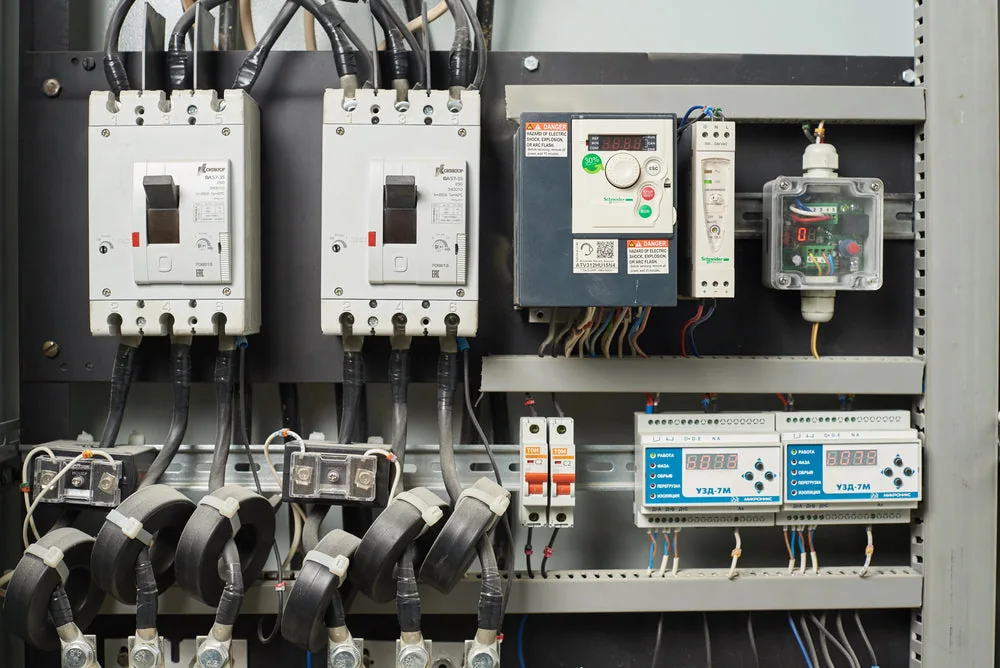
Submit identifiable new surplus, unopened maintenance spares, clean unused overstock, and organized removed lots from panelboards, switchgear, motor-control equipment, and distribution projects. Molded-case, insulated-case, low-voltage power, air, feeder, main, shunt-trip, and drawout breakers can be considered when the configuration and included parts are clear. Original cartons, matching quantities, cradles, cells, rails, and accessories should be listed rather than assumed.
Describe condition without upgrading it: new-in-box, unused, removed, tested, untested, incomplete, damaged, exposed to water, smoke, corrosion, or outdoor storage. Keep available maintenance, commissioning, removal, and test records with the lot. Food processing and temperature-controlled facilities are relevant local contexts: Missouri’s economic-development department reported a 327,000-square-foot Kansas City food-processing and attached cold-storage project. Facility type alone does not establish suitability; the actual equipment and condition do. [Missouri Department of Economic Development](https://content.govdelivery.com/accounts/MODED/bulletins/344d91a)
New surplus or labeled maintenance spares
Identifiable molded-case, insulated-case, and power breakers
Drawout breakers with matching cells or accessories documented
Project overages and organized decommissioning inventories
03
How do I identify a breaker accurately?
Use labels and records, not appearance alone. Send a close, readable photo of the manufacturer nameplate and catalog or model number. Record the manufacturer, catalog/model, frame, trip rating, pole count, voltage, and interrupting rating. For electronic-trip equipment, include the trip-unit label, rating plug, and visible settings. These fields distinguish breakers that can look alike but have materially different electrical ratings and configurations.
For drawout or power breakers, identify fixed versus drawout mounting, the frame or cell relationship, position, and what is included: cradle, rails, shutters, secondary disconnects, racking gear, or control accessories. ABB’s WavePro identification guide illustrates why catalog data matters: its nameplate catalog number conveys frame and interrupting rating, trip-unit type and rating, and mounted accessories. If a label cannot be read safely, say so instead of estimating. [ABB WavePro catalog-number guide](https://library.e.abb.com/public/6f35c929c79c410e8cf8d7acfd700522/9AKK108467A9272_DET-169.pdf)
04
What photos and data should accompany the lot?
Create one spreadsheet or item list with a matching photo folder. For every item, provide manufacturer; catalog/model; frame; trip rating; poles; voltage; interrupting rating; trip unit; mounting or drawout details; quantity; and condition. Add serial numbers when visible, whether the breaker is installed or loose, known missing pieces, packaging, and the exact property area. Photograph the front, nameplate, sides when accessible, included accessories, packaging, and visible damage.
For a lineup, give every breaker an item number that appears in the photos and documents. An authorized equipment schedule, single-line diagram, packing list, purchase record, maintenance record, or removal log may resolve conflicting descriptions. Do not take photos by opening or entering energized equipment. If terminals, stabs, or interior details are relevant, have qualified and authorized site personnel address them only after the facility’s approved safety process has made access appropriate.
Useful photos include the following:
Nameplate, catalog number, front, sides, and visible trip unit
Drawout cradle, cell, rails, secondary disconnects, and accessories
Cartons, pallets, item labels, defects, water marks, or corrosion
Aisles, doorways, dock, stairs, staging area, and loading constraints
05
How should safety, authority, and lot records be handled?
Selling equipment does not override outage plans, owner approval, lease terms, security rules, insurer requirements, or a facility’s electrical-safety program. Confirm who has authority to release the breaker and whether landlord, lender, customer, project-owner, or utility approval is required. Retain the inventory, release authorization, removal scope, and chain-of-custody notes. Include any restrictions on documentation, escorts, or disclosure rather than omitting them.
Never open, service, rack, remove, or handle energized electrical equipment to prepare a sale submission. OSHA requires safety-related work practices around equipment that may be energized; equipment not locked out or tagged out must be treated as energized. Qualified, authorized personnel following the employer’s procedures must plan isolation, release stored energy, lockout/tagout, verify de-energization, and perform removal. A buyer’s review is not electrical-work authorization. [OSHA 29 CFR 1910.333](https://www.osha.gov/laws-regs/regulations/standardnumber/1910/1910.333)
06
What Kansas City freight and site-access details matter?
Describe access factually: dock or grade-level door, aisle and door clearance, stairs, elevator, forklift or pallet-jack availability, pallet or crate condition, approximate weight if known, appointment hours, staging area, vehicle limits, and whether a licensed contractor must remove equipment. Also flag badging, escort, food-safety, clean-room, warehouse-operating, rail-adjacent, or data-center security requirements. Do not assume a carrier may enter an occupied or secure facility without its owner’s approval.
Kansas City’s multimodal network does not eliminate individual-site constraints. Port KC describes its planned Missouri River Terminal as an intermodal rail and river-port development with freight-transload potential, while its access planning references rail, interstate, and water connections. Whether a lot is near that area or elsewhere in the city, freight feasibility still depends on the equipment’s packaging, release status, loading conditions, and site rules. Explain what is already palletized, loose, installed, or awaiting authorized removal. [Port KC—Missouri River Terminal](https://portkc.com/missouri-river-terminal/)
Never open energized equipment or remove electrical equipment solely for an inquiry. Use qualified personnel, lockout/tagout procedures and applicable site rules.
Straight answers
Questions sellers ask.
These answers are intentionally specific and conditional. Final terms depend on the equipment and written agreement.
Can I submit breakers from a Kansas City warehouse or logistics retrofit?+
Yes. Send itemized ratings, photos, quantities, condition, removal status, and dock or security rules. Transformer Buyers reviews nationwide opportunities case by case; building type alone does not determine whether a lot is a fit.
Can equipment from a food plant or cold-storage facility be considered?+
It can be submitted with truthful condition and environmental-exposure notes. State whether equipment encountered washdown, moisture, corrosion, or prolonged cold storage, and include maintenance or test documentation if available.
What if the catalog number is missing or unreadable?+
Send the clearest safely obtained nameplate, front, side, mounting, and packaging photos, plus any records. Identify unknown data as unknown rather than guessing. More information may be requested during a case-by-case review.
May I offer breakers that are still installed in switchgear?+
You may describe them if you have authority to offer them and can state outage, release, and removal constraints. Do not rack, remove, or open equipment for the inquiry; qualified, authorized personnel must manage electrical work.
Do used breakers need testing before submission?+
Testing is not required merely to submit an inquiry, but the status must be accurate. Include available test or maintenance records and never energize or access equipment outside approved site procedures to create sales information.
What documents should travel with a breaker lot?+
Useful records include an itemized inventory, release authorization, equipment schedule or authorized single-line, packing list, maintenance or test records, removal log, and notes on missing parts or damage. Match documents to item numbers and photos.