Sell Circuit Breakers in Richmond, VA | Equipment Buyers
Transformer Buyers reviews surplus, used, and decommissioned circuit breakers from Richmond-area facilities nationwide, case by case. Send equipment details and site constraints to begin a practical purchase review.
Transformer Buyers buys and evaluates eligible circuit breakers from Richmond, Virginia sellers, including facility owners, contractors, asset managers, and industrial surplus teams. We review opportunities nationwide on a case-by-case basis; every item is not necessarily a fit. A useful submission identifies the equipment, its condition, and safe site access.
Richmond sellers may be clearing one breaker, spare molded-case units, or a documented switchgear retirement. Legible markings, complete components, and traceable history make equipment easier to assess. Keep labels, trip units, shutters, cell hardware, and accessory bags with the material.
02
Which Richmond facility breakers may be worth submitting?
Opportunities arise during UPS and distribution upgrades at data centers, renovations in government facilities, manufacturing changes, warehouse expansions, and adaptive reuse. Virginia’s cloud and AI ecosystem includes operators, fiber networks, utility partners, and skilled trades. Richmond Economic Development also describes adaptive reuse and redevelopment planning, where an orderly inventory can keep equipment out of a demolition scope.
Submit low- and medium-voltage, insulated-case, power, air, molded-case, vacuum, drawout, fixed-mounted breakers, and coordinated spares with readable labels. State whether each offer is a loose breaker, line-up or panelboard component, or a breaker still installed in a cubicle.
Data-center upgrades: record installed or spare status and any UPS or switchgear association.
Government and controlled facilities: identify the authorized seller and release, escort, screening, or records requirements.
Manufacturing and logistics sites: separate clean spares from equipment exposed to dust, moisture, vibration, or outdoor conditions.
03
How do I identify a circuit breaker for a buying review?
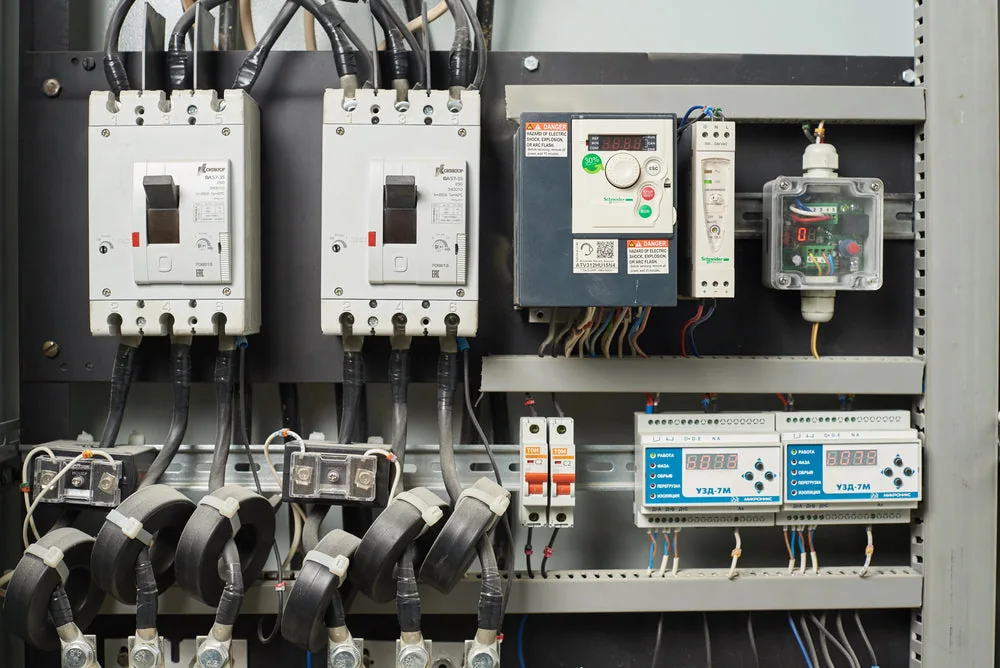
After safe access is established, photograph the front and side labels, terminals or stabs where visible, trip-unit face, and whole breaker. A catalog or model number is more useful than “800-amp breaker.” For installed equipment, report exterior markings; qualified, authorized personnel control inspection, isolation, and removal.
Use a spreadsheet or lot list beside each item. For identical breakers, give the count, photograph a representative label, and note exceptions. Record missing covers, broken handles, corrosion, damage, modifications, test history, storage environment, and included lugs, cradles, cells, shutters, or modules.
Manufacturer; catalog or model number; frame size; ampere or trip rating; and pole count.
Voltage rating; interrupting rating (AIC or kAIC); trip-unit type and settings; and date or serial markings when present.
Fixed, plug-in, or drawout mounting; cradle or cell details; quantity; condition; location; and whether the breaker is loose, stored, or installed.
04
What safety and authorization steps come before removal?
Never open energized equipment or remove a breaker for a sales inquiry. Electrical work can involve shock, arc-flash, fire, and explosion hazards. OSHA identifies electricity as a serious workplace hazard. The facility’s safety program, lockout/tagout process, labels, and rules—not a buyer’s request—govern de-energization, absence-of-voltage verification, disconnection, and release.
Confirm authority to sell before equipment is disconnected or moved. Leased spaces, public facilities, data halls, and contractor-managed projects may need owner, agency, tenant, lender, or project authorization. Keep energized, life-safety, utility-owned, and operationally required gear in service until responsible parties and qualified personnel approve the change.
Use a qualified, authorized electrical team for isolation, lockout/tagout, verification, and removal.
Retain custody records and identify any asset tag, project number, or work order that supports the release.
Do not represent untested equipment as tested; describe what is known and provide available test or maintenance records.
05
How should a Richmond breaker lot be documented?
A focused lot package helps during manufacturing shutdowns, public-facility upgrades, warehouse consolidations, and redevelopment. Include an inventory spreadsheet, dated photos, nameplate close-ups, quantities by model, and condition summary. Match photos to an asset tag, pallet, shelf, or switchgear section.
For removal projects, preserve available purchase or project records, maintenance logs, commissioning or test documents, release approvals, and a work record. Disclose exposure to water, smoke, chemicals, salt air, rodents, severe heat, or impact. If records are confidential, state that early and share only authorized information.
Separate complete, labeled breakers from parts-only, damaged, or unidentified material.
List hazardous-material or contamination concerns before anyone plans handling or transport.
Flag deadlines such as a construction handoff, but do not remove equipment ahead of approved de-energization.
06
What site-access information affects freight planning?
Richmond’s freight network makes accurate site details important, not automatic. Richmond Economic Development cites I-95 and I-64, nearby I-85, rail freight, the Richmond Marine Terminal, and Richmond International Airport. The airport reports cargo apron and warehouse capacity, but regional assets do not describe access at your building.
Provide truck entry, staging point, floor level, door and aisle constraints, dock or grade-level access, lifting equipment, pallet dimensions, approximate weights, check-in rules, and hours. Data centers and government facilities may require advance authorization, escorts, screening, or restricted photography. Coordinate loading around active manufacturing and logistics traffic.
Photograph staged equipment and its route to the loading point when authorized.
Identify drawout shipping position and whether its cell or cradle is included.
Disclose access limits, lifting needs, parking rules, and required site orientation.
07
How does a nationwide breaker review work?
Send the inventory, photos, condition notes, location, and access information together. Transformer Buyers reviews identification, quantity, completeness, condition, and practical logistics case by case. A review is not a purchase, fixed-price, pickup, or payment-timing promise.
For broader starting points, visit the circuit breaker buyer directory at /circuit-breaker-buyers and equipment guide at /circuit-breaker-guide. Sellers outside city limits should provide the exact location and ownership details before work is scheduled.
Never open energized equipment or remove electrical equipment solely for an inquiry. Use qualified personnel, lockout/tagout procedures and applicable site rules.
Straight answers
Questions sellers ask.
These answers are intentionally specific and conditional. Final terms depend on the equipment and written agreement.
Can I sell a single used circuit breaker from a Richmond facility?+
Yes. Submit clear manufacturer, model, ratings, condition, and photos. Suitability depends on the actual breaker and logistics, so include the exact location and whether it is stored or installed.
What photos should I send for a drawout breaker?+
Send the front, nameplates, sides, trip-unit face, stabs, and visible cradle, cell, shutter, racking, or accessories. Photograph damage and state whether the cradle or cell is included.
May my contractor remove the breaker before I contact you?+
Contacting us does not change facility safety requirements. Only qualified, authorized personnel under applicable electrical safety and lockout/tagout procedures should isolate, verify, remove, and release equipment. Never open energized equipment for sales information.
Do you buy breakers from government or data-center projects?+
Eligible equipment may be reviewed, subject to the item, quantity, condition, authority to sell, confidentiality, and site access. Identify the authorized seller and any escort, release, security, or records process early.
What if my breakers have no paperwork?+
Send legible nameplate photos, count, condition and storage notes, plus available asset tags or project references. Missing paperwork does not make unidentified or damaged material a known product, so describe the gap accurately.
Do regional freight connections mean pickup is simple?+
No. Regional infrastructure does not establish site access. A review needs the actual staging location, dimensions, weights, loading route, restrictions, and authorizations before transportation can be evaluated.