Sell Circuit Breakers in New York City, NY | Equipment Buyers
Transformer Buyers reviews surplus and used circuit breakers from New York City facilities case by case. Nameplate details, condition notes, ownership records, and access information support a responsible review.
01Nationwide opportunities are reviewed case by case.
02Nameplate photos identify more than amp rating alone.
03Authorized electrical personnel control isolation and removal.
04Dense-site loading requires early building-access planning.
01
Direct answer
Who buys circuit breakers in New York City, NY?
Transformer Buyers buys and reviews eligible surplus, used, and decommissioned circuit breakers from New York City sellers through a nationwide, case-by-case process. Owners, electrical contractors, facilities teams, and renovation managers can submit identified equipment with a release plan. An inquiry is an evaluation, not a purchase assurance.
New York City’s tall, occupied buildings and critical facilities make orderly replacement planning important. New York City Transit runs 472 subway stations and 665 miles of track; the Department of Buildings requires permits for most electrical work by Department-licensed contractors. Those facts reinforce a seller-first priority: protect operating systems and follow the facility’s approved scope before considering surplus removal. [1] [2]
Molded-case, insulated-case, low-voltage power, air, vacuum, and some medium-voltage breakers
New surplus, shelf spares, removed units, project overstock, and documented mixed lots
Drawout cells, cradles, trip units, accessories, and related switchgear components when identified separately
02
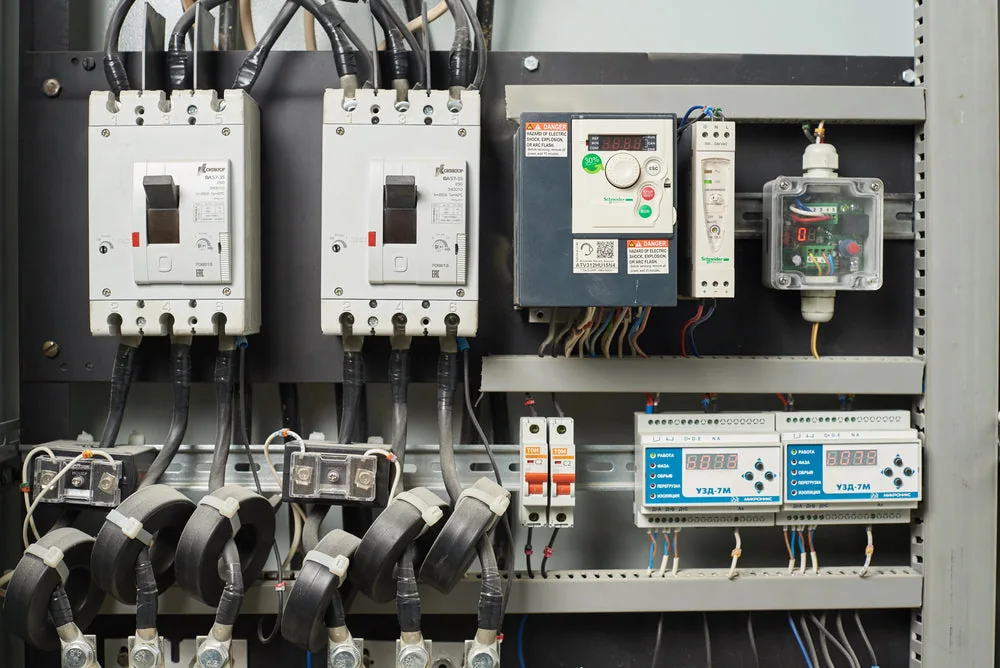
Identify the breaker from its markings, not its location
Begin with sharp photos of the manufacturer label and catalog or model number. Record manufacturer, catalog/model, frame, trip rating, pole count, voltage, interrupting rating, trip unit, mounting arrangement, drawout or fixed construction, quantity, and condition. Frame and ampere trip rating are distinct. Voltage, current, and interrupting ratings distinguish configurations; UL describes these markings. [4]
Photograph the full breaker, front label, trip unit, accessories, packaging, and visible damage. For drawout equipment, include the cell or cradle identity and rear connection area only after qualified personnel have made access safe. State whether the trip unit is thermal-magnetic or electronic, and capture displayed settings. Do not invent a suffix or translate a lineup designation into a catalog number.
Send close, readable label photos plus a full-unit image for scale
Separate each distinct catalog number and configuration on the inventory
Note missing covers, terminals, rating plugs, hardware, or accessories
03
Build a review-ready lot record
Use one row per breaker or matched assembly. Include the exact quantity, installed or loose status, serial number if available, storage location, estimated dimensions and weight, and dated photos. Attach manuals, test or maintenance records, purchase paperwork, and approved decommissioning documents when available. Describe prior service, storage conditions, corrosion, water exposure, modifications, damage, and missing parts plainly rather than assuming appearance proves condition.
For a high-rise, hospital, transit, or data-center renovation, also identify the equipment owner, release authority, project electrical contractor, approved outage window, and chain-of-custody requirements. Redact sensitive operational material if necessary, but preserve identifying ratings and material condition. Separating each lineup section, loose breaker group, and accessory lot lets Transformer Buyers review the nationwide opportunity without confusing reusable equipment with disposal material.
Inventory sheet with one item or assembly per row
Dated condition photos and supporting maintenance or test records
Written owner and release contact, plus removal status
04
Put authorization and safe de-energization before a sale
Never open energized equipment, remove covers, touch terminals, or attempt to inspect a breaker inside live gear for a sales inquiry. The owner and qualified electrical personnel must determine the outage, isolation, lockout/tagout, testing, and removal process. OSHA requires exposed live parts to be de-energized before work unless a defined exception applies, and requires a qualified person to verify a de-energized condition with test equipment before work proceeds. [3]
Confirm who owns the equipment and who can authorize release. In hospitals, data halls, transit facilities, and occupied towers, coordinate with operations, security, facilities, safety personnel, and the project electrician under the site’s own rules. Keep the breaker installed until the authorized team has completed its work. No equipment review should compromise life safety, emergency power, passenger service, patient care, or IT continuity.
Identify the authorized owner, facility contact, and removal contractor
Disclose outage restrictions, escorts, badging, and security requirements
Treat unverified or unisolated equipment as energized
05
Plan freight for a dense New York City site
Freight feasibility can depend on the path from electrical room to vehicle as much as on the breaker itself. State the borough, building floor, dock availability, freight-elevator dimensions, door and corridor restrictions, stairs, garage height, staging space, and any required rigging, union, insurance, or appointment procedures. Provide pallet or crate status and approximate weight. A small loose breaker and a large drawout assembly call for different handling plans.
Truck movement is a genuine local planning constraint: NYC DOT says close to 90% of the city’s goods move by truck and encourages off-hour commercial deliveries between 7 p.m. and 6 a.m. to reduce congestion and emissions. That program does not set a pickup schedule for a particular lot, but it makes early coordination with building management and the authorized removal team especially useful. [5]
Dock, curb, elevator, floor, route, and staging details
Weight, dimensions, packaging, and equipment-moving constraints
Delivery-hour, traffic, security, and certificate-of-insurance requirements
06
Describe condition honestly and keep equipment groups separate
Classify each item as unopened surplus, shelf-used spare, removed from service, tested, untested, damaged, incomplete, or parts-only. Do not call a breaker safe to energize because it looks clean. Reuse suitability requires equipment-specific inspection and application review by qualified parties. Complete labels, matched components, condition evidence, and a practical removal path can all affect whether an item is suitable for consideration.
Keep reusable breakers, electronic trip units, cells, bus hardware, and scrap in separate groups. Disclose contamination, alteration, missing components, or regulated-material concerns before handling is planned. For broader preparation, consult the circuit breaker buyer guide and city directory, then compare the molded-case, low-voltage power, switchgear-lot, and brand identification guides in the related pages below.
Never open energized equipment or remove electrical equipment solely for an inquiry. Use qualified personnel, lockout/tagout procedures and applicable site rules.
Straight answers
Questions sellers ask.
These answers are intentionally specific and conditional. Final terms depend on the equipment and written agreement.
Can I sell breakers that are still installed in a New York City building?+
They may be reviewed when the owner and qualified electrical team have authorized the project and established safe removal. State the planned outage, removal contractor, installed status, and access limitations. Do not open energized gear or remove an installed breaker simply to prepare a sale inquiry.
What details should I send to identify my circuit breaker?+
Send manufacturer, catalog/model, frame, trip rating, poles, voltage, interrupting rating, trip unit, mounting or drawout details, quantity, and condition. Include sharp photos of the full unit, labels, trip unit, accessories, packaging, and defects. Amp rating by itself is not enough.
Will you review a hospital, transit, or data-center surplus lot?+
Yes, a documented lot can be reviewed case by case. Explain ownership, chain of custody, operating constraints, approved outage window, release authority, and removal plan. The review does not override facility procedures or imply that any equipment can be removed while critical systems are operating.
How should I document a mixed switchgear and breaker lot?+
Make an inventory with one row per breaker, cell, accessory group, or lineup section. Add photos, ratings, quantities, condition, installed versus loose status, records, and known missing parts. Keeping reusable equipment separate from scrap makes the submission clearer.
What site-access information matters for a high-rise pickup?+
Provide the borough and building address, floor, loading dock or curb situation, freight-elevator capacity, stairs, corridor or door limits, staging room, weights, packaging, truck restrictions, security steps, work hours, and any rigging or insurance requirements.
Do you buy every old or damaged circuit breaker?+
No. Transformer Buyers reviews nationwide opportunities individually. Identification, condition, completeness, quantity, documentation, current demand, safe release, and practical freight access can affect whether equipment is suitable for consideration. A submission is an evaluation request, not a purchase commitment.