Sell Circuit Breakers in Miami, FL | Equipment Buyers
Transformer Buyers reviews Miami circuit breaker opportunities from commercial towers, hospitals, port and airport facilities, data centers, and redevelopment projects. Send clear equipment details and site constraints for a nationwide, case-by-case evaluation.
03Only authorized personnel should release equipment.
04Access details affect a practical freight plan.
01
Direct answer
Who buys circuit breakers in Miami?
Transformer Buyers evaluates surplus, used, removed, and decommissioned circuit breakers from Miami-area facilities and projects through a nationwide, case-by-case review. Facility managers, contractors, data-center operators, hospital teams, building owners, distributors, and redevelopment firms can submit equipment. Useful inquiries state what the gear is, its condition, ownership, and authorized release; no blanket offer applies to every item.
Miami's vertical commercial buildings and critical facilities can make an ordinary breaker lot operationally sensitive. A breaker from an office-tower electrical room differs from one still assigned to a hospital continuity plan, port tenant space, or airport support building. Begin before labels are separated or equipment is mixed with scrap, so the review can address identifiable equipment and removal circumstances.
02
What circuit breakers can be worth reviewing?
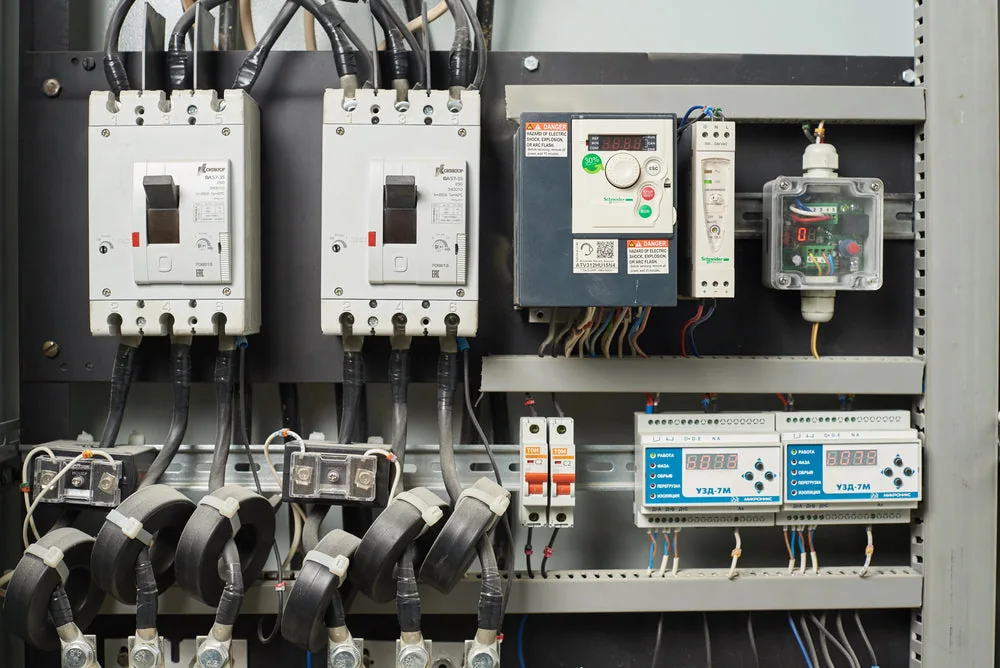
Relevant inventory can include molded-case, insulated-case, low-voltage power, air, drawout, and certain medium-voltage vacuum breakers. Complete, clearly identified units are easier to evaluate than loose, altered parts. A single spare may be submitted with a shutdown lot; quantity, commonality, vintage, condition, accessories, and traceable catalog information all matter.
Replacement does not make a breaker unusable, and age alone does not create resale value. Water exposure, corrosion, heat damage, missing trip units, broken mechanisms, obsolete configurations, incomplete cradles, and unknown history can affect review. In a redevelopment cleanout, separate breakers, trip units, frames, cradles, shutters, and accessories instead of combining them in an unlabeled scrap bin.
Surplus shelf stock, project overages, and unopened spares
Removed breakers from switchgear upgrades or tenant improvements
Drawout breaker assemblies with matching cradles and accessories
Documented lots from electrical-room, plant, or data-center changes
03
Identify the breaker before requesting a review
The nameplate and catalog label are more dependable than a visual guess. Photograph the front and side labels, trip unit, terminals or stabs, and the full breaker. For a drawout unit, photograph the cradle, shutters, rails, secondary-disconnect area, and accessory hardware. Capture markings as found; do not remove covers, open energized equipment, or disturb installed gear merely for a photo.
If a detail is unreadable or unknown, say so. A clear list distinguishes a breaker frame from its trip configuration and prevents an incorrect description from following the lot. A site contact can also send panel schedules, one-line excerpts, packing lists, maintenance records, or purchase documentation when available and appropriate to share.
Manufacturer and catalog or model number
Frame size, trip rating, pole count, voltage, and interrupting rating
Trip-unit type and settings, if shown; mounting style or drawout details
Quantity, serial or asset numbers where available, and overall condition
Photos of labels, fronts, sides, terminals, accessories, crates, and storage area
04
Protect people, operations, and authorization
Electrical safety and site authority come before resale. Never advise a crew to open energized equipment or remove a breaker while it remains part of a live system. OSHA states that exposed live parts should be de-energized before employees work on or near them, with lockout/tagout and verification requirements [OSHA electrical work practices](https://www.osha.gov/laws-regs/regulations/standardnumber/1910/1910.333). The owner or employer should use written procedures and qualified electrical personnel to determine safe timing.
For hospitals, data centers, and other continuity-dependent facilities, coordinate with operations, safety, and electrical teams before a shutdown, transfer, or removal. Confirm ownership, disposition authority, lease or warranty status, and any tenant, insurer, utility, or security rule. Transformer Buyers' review does not replace a facility's engineering, lockout/tagout, infection-control, security, or hazardous-materials procedures.
05
Make the lot auditable and describable
A good lot record connects each breaker to its photos, location, and disposition authority. Create an inventory with item number, manufacturer, catalog number, ratings, quantity, condition, storage location, and matching photos. Retain a purchase order, asset-disposition approval, contractor turnover record, or other evidence of the right to sell. For multi-owner properties, do not assume removed gear belongs to the contractor or building owner.
State the condition plainly: unused, shelf surplus, removed but complete, previously energized, damaged, wet, corroded, incomplete, or untested. Include known defects and flood or storm exposure. Miami-Dade County identifies flooding, coastal storms, and hurricanes as local resilience considerations and provides property-level flood-risk layers [Miami-Dade sea level rise and flooding](https://www.miamidade.gov/global/environment/resilience/sea-level-rise-flooding.page). Candid storage and exposure notes are more useful than trying to clean up a history a photo may reveal.
06
Plan Miami freight and site access before equipment moves
Access can determine whether a breaker lot is practical to handle. State whether equipment is on a loading dock, in a tower basement, above grade, behind security, inside a shutdown window, or already palletized. Provide approximate dimensions and weight when known; identify stairs, elevators, low-clearance routes, dock hours, forklift availability, rigging needs, parking limits, and responsibility for packing or moving. Travel-path photos can be more useful than an address alone.
Port and airport properties may add credentialing, escort, customs, tenant, or secure-area requirements. PortMiami says facility access requires appropriate credentials and describes its highway-connected tunnel; its 2035 plan anticipates cargo and cruise growth [PortMiami 2035 Master Plan](https://www.miamidade.gov/portmiami/master-plan.page). Miami International Airport reports 3.4 million tons of freight in 2025 and extensive cargo facilities [MIA Cargo Service Development](https://www.miami-airport.com/home-cargo.asp). These facts do not create a pickup commitment; disclose access restrictions and schedule needs early.
For redevelopment, sequence disposition after owner release, the electrical safety plan, and required environmental or construction controls. Keep breakers sheltered, labeled, and separated by item. For a mixed citywide portfolio, provide a location-by-location inventory instead of one blended total. That lets Transformer Buyers review a nationwide opportunity responsibly and shows whether further coordination is warranted.
Never open energized equipment or remove electrical equipment solely for an inquiry. Use qualified personnel, lockout/tagout procedures and applicable site rules.
Straight answers
Questions sellers ask.
These answers are intentionally specific and conditional. Final terms depend on the equipment and written agreement.
Can I submit a single spare breaker from a Miami building?+
Yes. Include the nameplate photos, catalog number, ratings, quantity, condition, and whether the unit is unused or removed. A single item can be reviewed, although suitability depends on the item and the opportunity as a whole.
What if the breaker is installed in active switchgear?+
Do not open energized equipment or attempt removal for a resale inquiry. Work through the owner's authorized, qualified electrical personnel and the site's safety procedures. Photos and records already available may be enough to begin a review.
Do drawout breakers need their cradles?+
Send photos and identify any matching cradle, shutters, racking hardware, secondary disconnects, and accessories. Completeness affects identification and evaluation, so do not separate or discard related hardware without documenting it.
How should I describe a breaker with water or corrosion damage?+
Describe the exposure honestly and photograph the affected areas, labels, terminals, and storage setting. Note whether the breaker was wet, stored after a storm, cleaned, tested, or left untested. Condition information helps determine whether review is appropriate.
What paperwork should a redevelopment contractor keep?+
Keep the owner authorization or disposition approval, inventory, photos, packing records, and any turnover or asset documentation available. The contractor should confirm the right to sell before representing removed equipment as available.
Can a port, airport, hospital, or data-center location be reviewed?+
Yes, provided the owner-authorized opportunity can be described safely. State the security rules, shutdown coordination, escort or credential requirements, access route, timing limits, and equipment status. Transformer Buyers reviews these nationwide opportunities case by case.