01
Direct answer
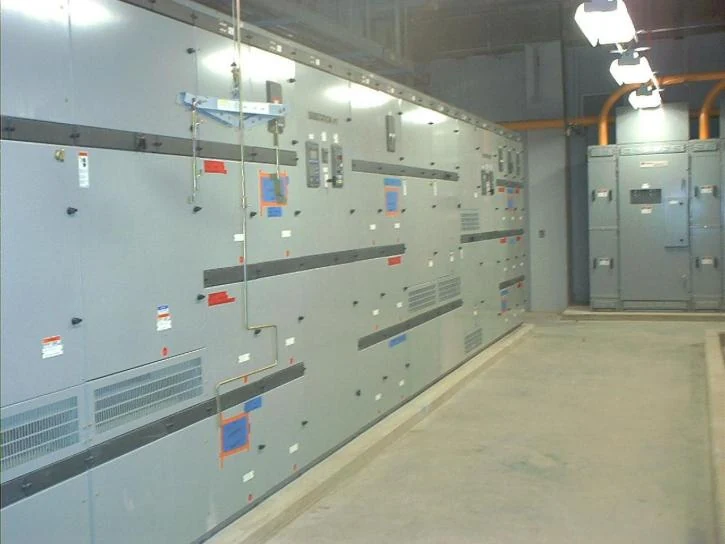
We Buy New and Used Electrical Switchgear
To inquire about selling ABB switchgear, send the assembly name, available ratings, location and photographs that can be obtained safely. We review nationwide opportunities case by case. New surplus and previously used equipment can be submitted, but the ABB brand does not guarantee acceptance of any particular assembly, condition or configuration.
The families mentioned here are manufacturer-verified identification references, not a guaranteed purchase list or available inventory. They do not indicate an ABB authorization, OEM relationship or parts-interchangeability claim. If the series is unknown, describe it as unknown rather than choosing a family from a photograph online.
02
Start with the ABB assembly identity
Look first at existing exterior assembly labels and the owner's equipment records. Copy the manufacturer and series exactly, along with any assembly serial number, order number or drawing reference. Keep the facility's equipment tag separate: a tag such as Main Switchgear helps connect records, but is not the manufacturer's model designation.
Separate the enclosure's identity from component names. An ABB breaker, relay or meter can identify that component without establishing who built the complete assembly. If the paperwork calls the equipment a switchboard, preserve that description instead of relabeling it switchgear. Include a readable record or label image so the buying inquiry starts from evidence rather than appearance.
03
Recognizing MNS SG low-voltage switchgear
ABB describes MNS SG as metal-enclosed low-voltage power circuit breaker switchgear for ANSI/NEMA/UL applications. Its product page identifies UL 1558 and ANSI C37.20.1, and lists Emax 100% rated UL 1066 circuit breakers. These references help distinguish an MNS SG assembly from an unidentified cabinet containing ABB components. [1]
MNS SG has a modular electrical and mechanical design, allowing different interior arrangements. ABB also lists an optional exhaust plenum. Identify the configuration actually documented for your assembly, including the main and feeder arrangement and any listed plenum. Do not assume that a generic catalog feature is present, or that every MNS-labeled product has the same construction. [1]
04
Distinguishing SafeGear from SafeGear HD
ABB identifies SafeGear and SafeGear HD as indoor, medium-voltage, metal-clad arc-resistant switchgear families for primary distribution up to 15 kV. Its page references IEEE C37.20.2 for metal-clad construction and IEEE C37.20.7 for arc-resistant testing guidelines. That specific manufacturer description is more informative than simply calling the enclosure metal-enclosed. [2]
The same page describes SafeGear applications up to 50 kA and SafeGear HD for 63 kA applications. Preserve the HD suffix when it appears in the assembly records, but report your equipment's actual ratings rather than copying these family-level figures. They are not purchase limits, and a rating quoted without its nameplate heading is incomplete identification. [2]
05
Describe the documented breaker and compartment arrangement
ABB states that SafeGear and SafeGear HD use ADVAC breakers with spring-charge mechanisms; AMVAC magnetically actuated breakers are available for SafeGear. This distinction makes the exact breaker designation useful alongside the assembly series. A shared ABB logo does not establish that a different breaker belongs in a particular compartment. No substitution or compatibility is implied by these examples. [2]
ABB also describes one-high and two-high module arrangements, with instrument, breaker, PT/CPT/fuse, bus and cable compartments. Use existing drawings to describe your arrangement and identify which specified components are included. PT and CPT refer to potential and control power transformers. Record an uncertain component as unconfirmed; do not seek interior photographs to resolve it yourself. [2]
06
Match ratings and documents to the offered assembly
Send the available assembly nameplate information with its headings intact. Voltage, continuous current and short-circuit information describe different characteristics. A bus withstand rating is not automatically a breaker interrupting rating, and a breaker label should not replace the assembly rating. If only one label is available, identify which piece of equipment it belongs to.
For ABB gear, an order-specific general arrangement, one-line diagram and component schedule can connect the series name to the actual sections being offered. State whether drawings are original, revised or of uncertain status. Note any documented changes to breakers, controls or section count. A generic MNS SG or SafeGear brochure helps identification, but does not establish your assembly's completeness.
07
Describe condition without turning records into guarantees
Tell us whether the ABB assembly is unused, previously operated, stored after removal or still installed. For unused gear, include available factory paperwork and storage information. For used gear, provide existing maintenance records and known modifications. Describe water exposure, corrosion, damaged enclosures or missing listed components candidly; their effect on a purchase decision is reviewed individually.
An old maintenance report does not establish present condition. Identify its date and the equipment it covers rather than describing the entire assembly as tested. Use existing exterior views and records for the inquiry. Any work requiring electrical access, isolation or removal belongs with qualified personnel under applicable safety procedures, not with a seller gathering marketing photographs. [3]
08
Send an ABB-specific purchasing inquiry
Text available pictures to (951) 733-6603 or email electricalsurplusbuyers@gmail.com. Include the ABB assembly series if known, serial or order references, readable label information and the number of sections offered. Add the location, new or used status, known omissions and whether the equipment remains installed. Explain your authority to sell and any known availability restrictions.
Keep uncertain details clearly marked. For example, identifying a documented SafeGear assembly while noting an unconfirmed breaker designation is more useful than guessing. Purchase eligibility and any inspection, removal, freight or payment terms must be agreed for the particular opportunity. Sending an inquiry is not an acceptance commitment or a promise of pickup.