01
Direct answer
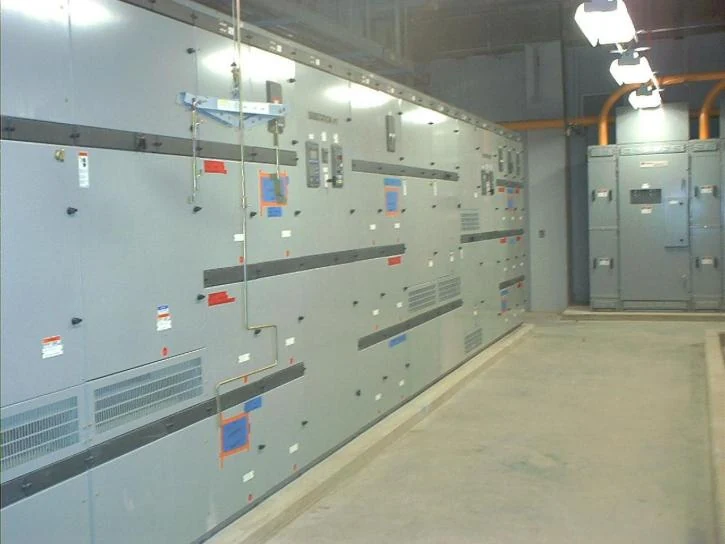
We Buy New and Used Electrical Switchgear
Our manufacturer directory covers inquiries for Eaton and Cutler-Hammer, Square D and Schneider Electric, Siemens and ITE, ABB, GE, Westinghouse and Powell switchgear. These names help route your inquiry; they are not a blanket promise to buy every product carrying those labels. Purchasing decisions depend on the particular assembly and the information available about it.
Start with the manufacturer shown on the assembly nameplate or original project documents. Then provide the family or type designation, if recorded. The examples below are identification references, not a guaranteed purchase list, available inventory, an OEM relationship or a statement that parts interchange. Nationwide opportunities are reviewed individually.
02
Choose the directory entry from the assembly label
For Eaton or Cutler-Hammer labels, use the combined Eaton and Cutler-Hammer entry. For Square D or Schneider Electric labels, use that combined entry. Siemens and ITE also share a directory entry. Record the actual wording on your equipment rather than substituting one name for another; grouping directory entries does not establish that two assemblies have identical construction.
ABB, GE, Westinghouse and Powell have their own entries. Choose the name supported by your assembly label, even if someone describes the equipment using a different current brand. If your records contain more than one manufacturer, identify which document or label carries each name. An assembly manufacturer, breaker manufacturer and replacement-component supplier need not be the same.
03
Separate manufacturer, assembly series and component names
A manufacturer name answers who supplied the labeled equipment. An assembly family or type identifies a product design. A breaker type identifies a component within it. Send these as separate fields when possible. A close-up of a breaker logo alone may not identify the switchgear housing, bus arrangement or other sections being offered.
Also preserve the equipment description from the records. Switchgear and switchboards are not universal synonyms, and a panelboard or loose breaker is not a switchgear lineup merely because it has the same brand. If classification is uncertain, write the recorded description and attach the supporting label or drawing. Do not upgrade a metal-enclosed description to metal-clad without documentation.
04
Eaton example: Magnum DS assembly identification
Eaton describes Magnum DS as low-voltage metal-enclosed switchgear using draw-out power circuit breakers. Its product information includes engineered-to-order configurations and indoor NEMA 1 or outdoor NEMA 3R enclosure designs. These distinctions help explain why a brand and family name alone cannot describe every Magnum DS assembly. [1]
If your existing documents identify Magnum DS, report that assembly name separately from the breaker type. Include the enclosure designation and configuration shown on the order drawings, when available. Do not copy the current product page's maximum ratings into your inquiry: the voltage, bus rating and breaker ratings must come from your equipment records. A withstand rating and a breaker interrupting rating describe different capabilities.
05
Square D example: Power-Zone 4 versus Masterpact
Schneider Electric identifies Power-Zone 4 as low-voltage drawout switchgear with Masterpact circuit breakers. Its product page references Masterpact NT/NW breakers and distinguishes standard, front-accessible and arc-resistant options. Power-Zone 4 identifies the switchgear family; Masterpact identifies the breaker family. Those names should not be substituted for each other in a seller description. [2]
For a Power-Zone 4 inquiry, provide the assembly designation and the breaker designation recorded for your actual equipment. State any documented construction option rather than assuming every Power-Zone 4 lineup is arc-resistant or front-accessible. If a breaker was replaced during service, send the available replacement record with the original assembly information. Matching brand names do not prove component compatibility.
06
Siemens example: Type WL and connection arrangement
Siemens describes Type WL rear-connected low-voltage switchgear as an assembly built around WL breakers, with controls at the front and cable terminations at the rear. Its portfolio also distinguishes front-connected and arc-resistant variants. That makes the documented connection arrangement useful alongside the Type WL name. [3]
If you have Siemens WL equipment, identify whether WL appears on the assembly records, a breaker label or both. Provide the arrangement stated in existing drawings without seeking internal access. For ITE-labeled equipment, preserve the ITE designation and original catalog or type number rather than describing it as current WL gear. The combined directory entry is a navigation choice, not proof that legacy and current components fit each other.
07
Describe legacy or uncertain manufacturer identities
For ABB, GE, Westinghouse, Powell or another recorded manufacturer, an exact type number is more useful than guessing a modern equivalent. Send the assembly serial number or project number when available, plus the drawing title and revision. Keep labels on individual components tied to their section references so they are not mistaken for the identity of the whole assembly.
If the manufacturer cannot be confirmed, say so. An old invoice, equipment schedule or existing maintenance photograph may provide a starting point, but explain what it actually identifies. Describe conflicting names openly. Brand uncertainty does not justify unsafe access, and an older logo alone does not establish condition, completeness or purchase eligibility.
08
Prepare a brand-specific purchasing inquiry safely
Send the recorded manufacturer, assembly family, type or catalog number, and available ratings. Add existing exterior photographs and relevant drawing pages. Identify how many sections belong to the assembly and whether the records describe the equipment currently offered. Note known component replacements, missing identification plates or discrepancies between labels and paperwork; those details prevent a misleading brand-only description.
Use only labels and records available safely. Do not open compartments, remove covers, operate breakers or perform tests to answer an inquiry. Qualified personnel handle inspections requiring access, electrical isolation and removal. OSHA's electrical work rules set specific protections for work on or near exposed electrical parts; equipment described as off is not permission to access it. [4]
Text photographs to (951) 733-6603 or email electricalsurplusbuyers@gmail.com. Include the equipment location, your authority to offer it and whether it is installed or stored. Unknown details can be marked unknown. Any acceptance and transaction arrangements must be agreed for the particular equipment.