01
Direct answer
Can you sell legacy Westinghouse switchgear?
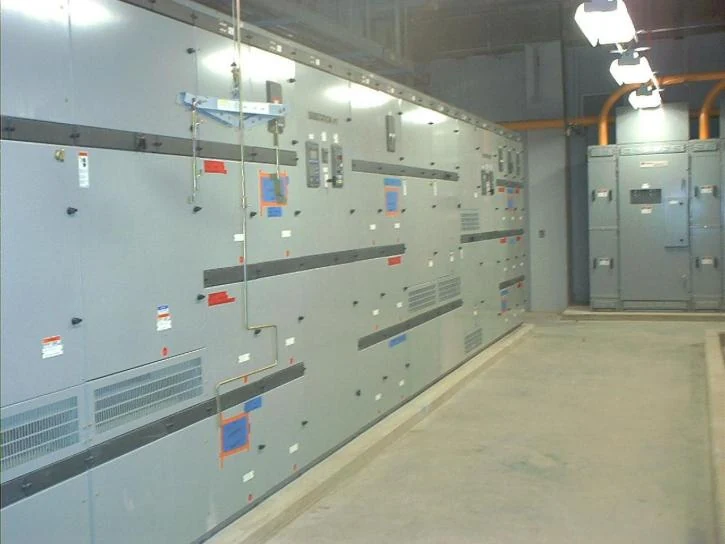
We buy new and used electrical switchgear, including inquiries about legacy Westinghouse assemblies. Send the equipment identity, available photographs, location and known condition for consideration. Age or a familiar Westinghouse nameplate does not guarantee acceptance. An unused older assembly also needs review of its storage history and completeness, rather than being assumed suitable because it never entered service.
The family names below are identification references, not a guaranteed purchase list, stock inventory, OEM relationship or parts-interchangeability claim. Describe the complete assembly you own, not simply a breaker model. Preserve the wording on existing labels so the inquiry distinguishes original Westinghouse equipment from later components or modifications.
02
Identify DB assemblies and their mounting configuration
Eaton's legacy documentation describes DB switchgear with Westinghouse logos and nameplates. It lists standard DB15, DB25, DB50, DB75 and DB100 breakers, alongside current-limiting DBL variants. These references help interpret a drawing or maintenance list; they do not establish the rating or buying eligibility of your particular lineup. [1]
DB assemblies were offered with fixed-mounted breakers or three-position drawout breakers. State which arrangement the records show, and distinguish a breaker designation from the assembly nameplate. Many DB breakers originally had electromechanical trip units, while later retrofits used Amptector or Digitrip units. Include any retrofit paperwork so a newer trip-unit label is not mistaken for the age or identity of the entire assembly. [1]
03
Use DS and WPA order references, not appearance alone
A DS breaker reference can appear in more than one legacy structure. Eaton documents both Westinghouse DS switchgear vintages and WPA switchgear that used DS breakers but differed structurally. This is why an inquiry saying only 'Westinghouse DS breakers' leaves important questions about the assembly unanswered. Include the structure designation and original ordering information when available. [1]
The catalog associates early DS vintages with shop-order prefixes 24Y and 27Y, while WPA generally used General Order and Item numbers. Copy the full number from an existing exterior label or drawing title block, including its prefix and item designation. These are useful matching clues, not a substitute for equipment-specific confirmation. If records conflict, send both versions and identify which belongs to the original installation. [1]
04
Keep DS, DSL and documented fuse arrangements distinct
Eaton's DS and DSL instruction book describes horizontal drawout magnetic-air power circuit breakers. The complete type designation matters: do not shorten DS-416S to DS-416 or omit the L from a DSL reference when transcribing records. Send the actual ratings shown for that breaker rather than applying a family-wide maximum. [2]
DSL configurations add another completeness question. The manual identifies integral current limiters on DSL-206 and DSL-416, while larger configurations use DS-632 or DS-840 breakers with separate drawout fuse trucks in interlocked compartments. If the original schedule includes those assemblies, say whether the included-equipment records account for them. Do not inspect internal compartments to answer; an unknown item can remain explicitly unconfirmed in the inquiry. [2]
05
Separate DH, DHP Porcel-line and later vacuum references
For medium-voltage Westinghouse gear, DH and DHP are distinct legacy identifiers. Eaton describes DH air-magnetic switchgear and DHP Porcel-line metal-clad switchgear. DHP used porcelain insulation on live parts to ground and was supplied in indoor, sheltered-aisle outdoor and aisle-less outdoor configurations. Use the original designation and enclosure description from records rather than inferring them from a cabinet photograph. [1]
DHP production included changes in operating mechanisms and pole-unit construction, so the family name alone is incomplete. Eaton also documents DVP vacuum breakers associated with DHP assemblies and later vacuum replacements. List the present breaker type separately from the original assembly type, with modification records where available. A replacement-breaker label does not turn the entire legacy lineup into a newly manufactured assembly. [1]
06
Match original drawings to the labels that remain
Useful Westinghouse records include the original general arrangement, one-line diagram, section schedule and order paperwork. Send drawing numbers and revision dates, especially if sections were added after the initial installation. Identify which sections are included in the sale and whether the drawings describe today's arrangement or an earlier configuration.
Keep assembly voltage and bus ratings separate from breaker ratings. Some legacy DH and DHP documentation expresses ratings using kV and MVA; preserve those units exactly rather than converting a remembered number into an assumed modern rating. A bus withstand rating is not automatically a breaker interrupting rating. Legible label photographs and matching records are more useful than a guessed specification. [1]
07
Describe retirement history without claiming present performance
Explain why the Westinghouse assembly became surplus: a facility upgrade, retirement, project cancellation or another documented reason. Give the last known service date if available and distinguish it from the removal or storage date. Include existing maintenance reports and disclose known faults, water exposure, corrosion, missing devices or prior alterations.
For gear that has changed hands, explain what records came with it and what remains unknown. A previous owner's statement that it operated before retirement is not proof of current condition. Likewise, a dated maintenance report describes the work recorded at that time, not a new test or warranty. Clear qualifications let the purchasing inquiry reflect the actual evidence rather than an unsupported claim.
08
Prepare a safe Westinghouse purchasing inquiry
Use safely accessible exterior labels, closed-door overview photographs and existing records. OSHA's electrical work-practice rule assigns verification of deenergized condition to qualified persons; retired or disconnected equipment should not simply be assumed safe. Qualified personnel handle isolation, removal and any inspection requiring access. No compartment access or electrical operation is needed to begin your selling inquiry. [3]
Text photographs to (951) 733-6603 or email electricalsurplusbuyers@gmail.com. Include the original Westinghouse designation, full order numbers, documented configuration, section count and included records. Add the location, ownership authority and whether the assembly is installed, removed or stored. Nationwide opportunities are considered case by case; acceptance and transaction arrangements depend on review, not on a model name alone.