01
Direct answer
Sell your Powell assembly with a defined scope
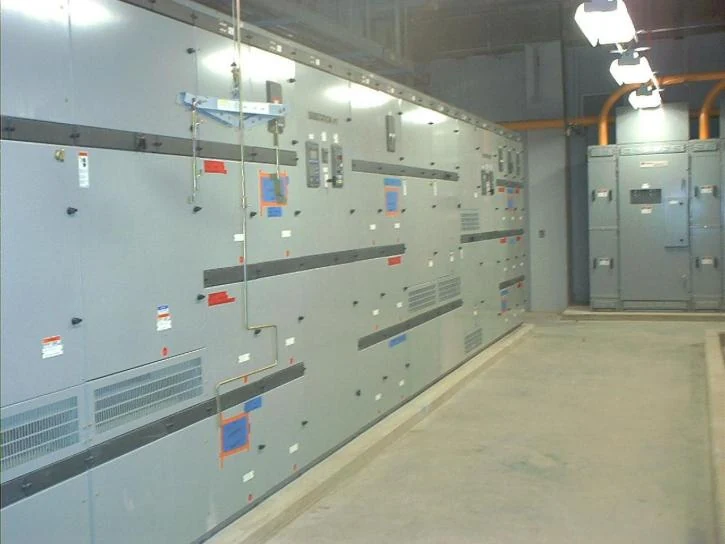
We buy new and used electrical switchgear and welcome inquiries about Powell project assemblies. Start with exterior photographs, an existing assembly nameplate record and a description of the equipment you own. State whether the proposed sale covers the complete original lineup or selected project sections. Each assembly is reviewed individually; neither the Powell label nor an unused condition guarantees a purchase.
For project-built gear, a section count is only a starting point. The drawings should explain which sections belong together and which breakers, controls and accessories are included. That information helps us understand the offered assembly without assuming that everything shown in the original project package remains available.
02
Identify the Powell family without assuming compatibility
Powell lists PowlVac switchgear in standard, arc-resistant and narrow-design constructions. Standard PowlVac includes one-high and two-high arrangements and indoor NEMA-1 or outdoor NEMA-3R designs. If your records identify PowlVac-AR, include the documented arc-resistant designation rather than describing any enclosed cabinet as arc-resistant. PowlVac-ND identifies a space-saving construction, so its documented dimensions help distinguish it from standard gear. [1]
Powell also lists Power/Vac as 5kV and 15kV metal-clad switchgear using vacuum circuit breaker technology. Preserve the exact spelling and product designation from your assembly records; do not rename Power/Vac as PowlVac simply because both appear in Powell literature. [2]
These families are identification references, not a guaranteed purchase list, available inventory or an interchangeability claim. We are not representing an OEM relationship. Catalog configurations help interpret a label, but your equipment's own ratings and project records determine what is actually offered.
03
Connect the nameplate to the project drawings
Send the manufacturer job or order number, assembly serial number and drawing references exactly as shown in existing records. Include the drawing revision and whether the document is an original proposal, approved drawing or later as-built record. Different revisions can describe different section arrangements, so explain any known mismatch between the drawing and the equipment.
Useful documents include the one-line diagram, general arrangement, section schedule and equipment list. The one-line describes electrical relationships; the arrangement shows the physical lineup. Together, they help identify the main, tie and feeder sections being offered. Copy voltage, main bus current and breaker ratings with their labels intact. A bus withstand rating is not automatically a breaker interrupting rating, and a component label does not establish every assembly rating.
04
Describe the sections that still belong together
Use existing section identifiers to map your photographs to the lineup drawing. Report the number of sections offered, their original order and any sections retained by the facility. For one-high or two-high gear, distinguish the documented breaker positions from the number of breakers actually included; an unused position is not necessarily a missing breaker. [1]
If the assembly was previously separated for shipping or storage, provide the existing shipping-split records and identify each group. Note whether the documented joining hardware, connection materials and end sections are included, missing or unconfirmed. Do not infer that another Powell section will mate with it. Matching project identifiers and records are more useful than similar exterior dimensions alone.
05
Show the control and protection scope in records
Provide relay and meter model information from existing inventories, drawings or safely visible exterior labels. Identify the documented control power voltage and any separate control power equipment included in the sale. Where records show remote control panels or communications equipment, state whether those items remain with the facility or accompany the lineup.
Explain known changes to protection or controls since the drawings were issued. Existing maintenance notes can document a replaced relay, revised wiring or removed accessory without requiring new testing. Distinguish the original specified equipment from the components currently reported as present. Do not describe settings, software or communications features as transferable or complete unless your records support that description.
06
Separate the switchgear from a PCR or enclosure package
Powell's integrated offerings include Power Control Rooms, or PCRs, built on structural skid bases with single-piece or multi-split designs and integrated power and control interconnections. Its E-Houses use rigid-frame construction on structural steel skids. A building label therefore does not by itself identify the switchgear family inside. [3]
Powell also offers Power Control Aisle protected aisle enclosures, primarily for Power/Vac but also for other equipment. State whether your inquiry concerns the switchgear alone or a larger package. [3]
Identify any room, skid, separate control panels or auxiliary systems you propose to include. Provide existing package drawings and dimensions when available. Review of a Powell lineup does not automatically mean acceptance of its enclosing structure or every associated item.
07
Report condition using safe, existing information
Describe the assembly as unused, previously operated, installed awaiting retirement or already removed, as applicable. For unused project gear, include available packing lists and storage history. For used gear, provide existing service records and disclose known alterations, water exposure, corrosion, impact damage or missing components. An original factory document is not evidence of the equipment's present condition.
Use existing exterior labels, accessible exterior views and records already held by the owner. Do not open energized compartments, remove covers, rack breakers or perform tests for a purchasing inquiry. OSHA requires electrical work practices appropriate to the hazards and restricts work on equipment that has not been deenergized under its procedures to qualified persons. Any inspection requiring access, electrical isolation or removal belongs to qualified personnel, not this seller checklist. [4]
08
Prepare a Powell purchasing inquiry
Call or text (951) 733-6603, or email electricalsurplusbuyers@gmail.com with photos and the available project documents. Include the equipment location, your authority to sell, the proposed sale boundary and whether the gear remains installed. If facility plans affect availability, state the known schedule without assuming that removal or transportation has been arranged.
Mark uncertain details as unknown rather than filling gaps from a catalog. A useful inquiry identifies the Powell family, ratings, section sequence, included controls and known condition issues. Purchase eligibility and any inspection, removal, freight or transaction terms require case-by-case agreement; submitting records does not establish an offer or a service commitment.