01
Direct answer
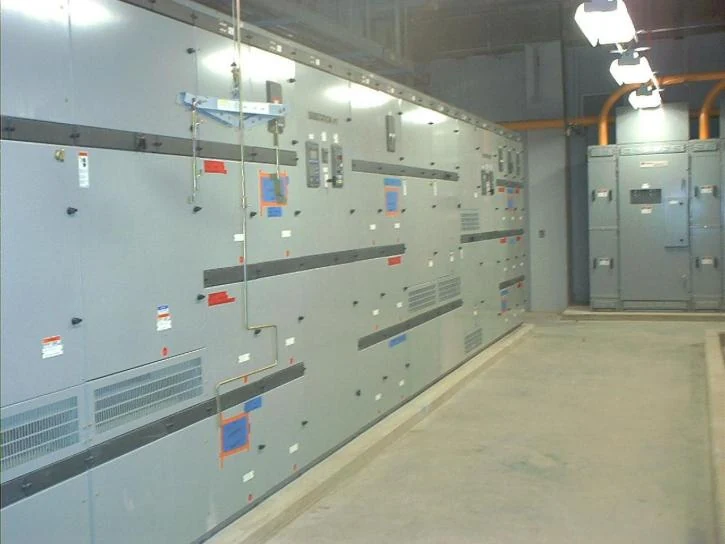
We Buy New and Used Electrical Switchgear
Send your low-voltage switchgear information for a case-by-case purchasing review. New surplus and used assemblies can be submitted, but a manufacturer name, voltage or cabinet count does not guarantee acceptance. Describe what is available and which components belong to that assembly.
The useful starting point is an assembly nameplate photograph, a closed-door overall view and any existing equipment schedule. Include your location and whether the equipment is installed, removed or stored. If a rating is unavailable, mark it unknown instead of estimating it from a nearby breaker or transformer.
02
Confirm switchgear rather than assuming switchboard
Low-voltage switchgear and switchboards can both be floor-mounted distribution equipment containing circuit breakers. Eaton identifies UL 1558 with metal-enclosed low-voltage power circuit breaker switchgear and UL 891 with switchboards. Copy the equipment designation and applicable standard from the assembly label or manufacturer records. [1]
Drawout breakers are an important configuration detail, but switchboards can also have drawout options. Front access is not decisive either: Eaton offers Front Access Magnum DS low-voltage switchgear. A metal enclosure alone does not establish a metal-clad classification. If records call the equipment a switchboard, retain that description in your inquiry rather than relabeling it to fit a buying category. [1] [2]
03
Separate the assembly identity from component labels
Provide the assembly manufacturer, product designation, serial number or factory order number, and manufacturing date when documented. Keep these separate from breaker catalog numbers. A breaker label identifies that device; it does not identify every section of the switchgear surrounding it.
Copy the rated voltage, frequency and phase or wire configuration exactly as shown. Include both an assembly rating and a documented operating voltage if your records distinguish them. Avoid rounding either number into a presumed voltage class. A single-line drawing or original submittal can connect the assembly identity to its main, tie and feeder devices. Identify the document revision so an earlier design is not mistaken for the equipment actually available.
04
Keep bus ratings and breaker ratings distinct
Record main bus continuous current separately from breaker current ratings. Also preserve the exact wording and units of short-circuit or short-time withstand information. Eaton's product documentation lists continuous main bus current, short-circuit withstand and short-time withstand as separate assembly characteristics. Do not report a bus withstand figure as a breaker interrupting rating. [2] [4]
For each documented breaker, distinguish frame size from sensor rating and trip information. Eaton's design guide gives an MDS-616 example: a 1600 A frame with 800 A sensors has an 800 A maximum continuous rating in that configuration. The frame number alone would misdescribe it. This is a model-specific identification example, not a rating rule to apply to every manufacturer's equipment. Supply existing label images or schedules rather than interpreting protection settings yourself. [4]
05
Describe the installed breaker configuration
Use existing schedules to identify the main, tie and feeder breakers, their quantities and their associated section or cell numbers. Record the breaker family, catalog designation and trip-unit name when available. Distinguish a position documented for a future breaker from a position whose originally installed breaker is now missing.
For identification, Eaton's Front Access Magnum DS assembly documentation describes drawout low-voltage power circuit breakers and references Magnum DS and NRX breaker configurations. These names illustrate why both the assembly family and breaker designation matter. They are identification references, not a guaranteed purchase list, available inventory, an OEM relationship or a claim that breakers interchange between cells or assemblies. Do not move breakers to obtain additional information. [2]
06
Identify the sections, bus arrangement and enclosure
State how many sections are included and list their identifiers from the exterior or existing drawings. Note whether the records describe one main, two mains with a tie, or another arrangement. A section count without that context can hide an omitted incoming section or a separate control section.
From records, report the main and vertical bus information, neutral arrangement and enclosure designation where available. Eaton's design guide treats main and vertical bus ratings separately and describes a neutral bus for four-wire configurations. These details should come from the particular assembly's paperwork, not a generic family brochure. Documented dimensions and front- or rear-access configuration also help describe the gear without requiring interior access. [2] [4]
07
State condition without claiming unverified performance
Describe the assembly as unused, previously operated or condition unknown, according to your records. Identify known changes to breakers, trip units or controls. Mention documented exposure, visible exterior corrosion, missing doors or known damage. If paperwork lists a component that is no longer included, flag the difference.
Existing maintenance reports can add context, but a past report is not proof of present operating condition. Do not conduct tests or obtain interior photographs for this inquiry. OSHA's electrical work-practice requirements address equipment that may be energized; qualified personnel must handle any inspection requiring access, electrical isolation and removal. A seller's description that gear is off is not permission to access it. [3]
08
Send a focused low-voltage purchasing inquiry
Text existing photographs to (951) 733-6603 or email electricalsurplusbuyers@gmail.com. Include the assembly identification, documented voltage and bus rating, breaker schedule, section count and condition description. Attach the relevant single-line or equipment schedule if available. State which accessories and records accompany the assembly and which details remain unconfirmed.
Add the equipment location, your authority to offer it for sale and its current installed or storage status. Nationwide opportunities are reviewed case by case. Any offer, inspection requirements, transaction terms and responsibility for handling must be agreed for the particular equipment; an inquiry does not establish acceptance or a pickup commitment.