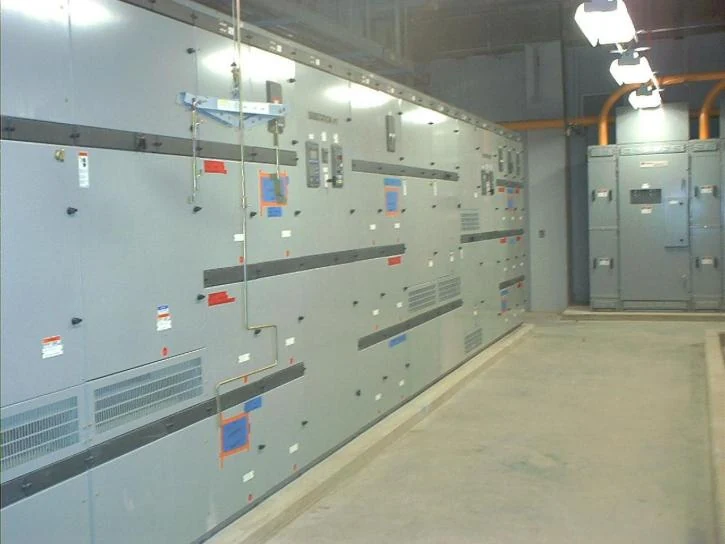
01
Direct answer
We Buy New and Used Electrical Switchgear
Have medium-voltage switchgear to sell? Send the manufacturer, assembly designation, documented ratings and location to (951) 733-6603 or electricalsurplusbuyers@gmail.com. Include whether it is unused, previously operated, retired or still installed. Nationwide opportunities are reviewed case by case; submitting information does not guarantee an offer or acceptance of a particular voltage class, model or condition.
For this inquiry, describe the switchgear assembly rather than only a breaker photographed inside it. The purchasing review needs to understand the equipment's identity and whether its switching, protection and auxiliary components are present. If some details are unavailable, identify those gaps instead of estimating technical ratings.
02
Separate the Assembly Rating From the Site Voltage
Copy the rated maximum voltage, frequency and main-bus continuous-current rating from an accessible assembly plate or manufacturer records. Also provide basic impulse insulation level, often abbreviated BIL, when documented. Keep the wording and units attached to each value. A voltage shown on a site one-line drawing describes a different piece of information from the assembly's rated maximum voltage.
Eaton's VacClad-W design guide presents insulation levels, main-bus continuous current and short-circuit withstand data as separate rating fields. Its assembly table also distinguishes withstand values from the circuit-breaker data. A bus withstand rating is not automatically the breaker interrupting rating. Send both records if available; do not combine them into one unlabeled amperage or kA figure. Published manufacturer specifications are not our approved purchase range. [1]
03
Match Breaker Cells to the Included Breakers
Use the existing section schedule or elevation drawing to list breaker cells and their recorded functions. State how many breakers are included and which cell each belongs to according to available records. Distinguish an equipped cell with a missing breaker from a space documented for future equipment. Those descriptions have different implications for assembly completeness.
Provide each breaker's type designation, serial number and documented voltage, continuous-current and interrupting ratings when available. Include recorded control-voltage information without operating equipment to obtain it. A common brand name or similar-looking front does not establish a breaker-to-cell match. If a replacement or retrofit is documented, include that paperwork rather than presenting the original assembly drawing as proof of the current configuration.
04
Use Manufacturer Families as Identification References
Eaton identifies VacClad-W 5–15 kV metal-clad switchgear with horizontal drawout Type VCP-W vacuum circuit breakers. Its guide describes breaker-over-breaker, auxiliaries-over-breaker and auxiliaries-over-auxiliaries arrangements. This explains why an auxiliary position should not be counted automatically as another breaker cell. Your assembly drawing determines which arrangement you have. [1]
Siemens identifies GM-SG as non-arc-resistant, air-insulated, metal-clad switchgear using horizontal drawout GMSG vacuum circuit breakers. GM-SG is an assembly designation; GMSG identifies the breaker type. These examples help identify records, not establish a guaranteed purchase list, available stock, an OEM relationship or parts interchangeability. Do not infer arc-resistant construction or metal-clad classification merely from a metal enclosure's appearance. [2]
05
Describe Protective Relays and Control Equipment
Include protective-relay manufacturers and model numbers from readable exterior faces, existing photographs or equipment lists. Associate each relay with its recorded main, tie or feeder circuit when the drawings provide that connection. Report known relay replacements, missing devices and control-panel modifications. A visible relay face alone does not establish that the associated protection system is complete or functioning.
Existing schematics, relay schedules and maintenance reports can explain the configuration more clearly than an exterior overview. If settings files or previous test reports are available, identify their date and the equipment they cover. These are historical records, not proof of present performance. Do not run tests, energize controls or change settings to prepare a sales inquiry.
06
Identify Instrument Transformers and Auxiliary Positions
Current transformers, or CTs, and voltage transformers, or VTs, provide inputs used by relays and meters. Voltage transformers may also be called potential transformers or PTs in records. Share documented ratios, quantities and circuit assignments. Eaton's guide shows that VT quantity and connection vary with the metering and relaying arrangement; cabinet size alone cannot establish what is installed. [1]
Separate instrument transformers from control power transformers, which supply control power. Eaton documents auxiliary configurations that can contain voltage transformers or control-power equipment. Describe each recorded auxiliary position and disclose known missing transformers, drawers or fuses. If their identity requires internal access, use existing drawings or reports and mark the contents unconfirmed rather than inspecting a compartment yourself. [1]
07
Explain Completeness Without Claiming Tested Condition
Compare the offered equipment with its existing bill of material or equipment schedule. Note whether the identified breakers, relays, instrument transformers and control-power components are included. If sections have already been separated, use their recorded identifiers to explain which belong to this assembly. List known exclusions clearly, especially components retained by the facility or sold separately.
For unused gear, disclose storage conditions and whether original paperwork is available. For used gear, provide the retirement reason and known exposure, damage or alterations affecting the identified components. Do not describe equipment as tested or ready for service simply because it operated previously. Missing records and missing hardware should be stated separately; neither uncertainty should be concealed by calling the assembly complete.
08
Prepare a Safe, Specific Purchase Inquiry
Send exterior overview photographs taken from a permitted safe location, accessible nameplate images and existing one-line, elevation and component schedules. Include the assembly's location, ownership or selling authority and whether it remains connected. Label photographs and records with matching section identifiers so the review can follow the relationship between the assembly and its components.
Do not open compartments, remove covers or move breakers for sales photographs. An off indication is not proof that electrical equipment is safe to access. Qualified personnel handle any inspection requiring access, electrical isolation and removal under applicable safety procedures. OSHA's electrical work-practice requirements reinforce that these are not seller documentation tasks. Purchase terms and any removal or transportation responsibilities must be agreed for the particular transaction. [3]